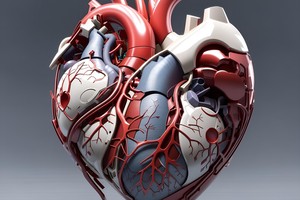

Living with a congenital heart defect (CHD) means navigating a body that often sends quiet signals. For many adults with mild or moderate CHDs, the condition was detected early. But for others—especially those with less severe defects—the diagnosis comes later in life, sometimes by accident. One reason for the delay? Certain daily habits can effectively mask the subtle symptoms, making it easy to dismiss warning signs as normal stress or getting older.
When you consistently rely on a specific routine to get through your day, it can create a false sense of normalcy. The body adapts, and the early whispers of a heart issue get tuned out. Below, we break down four common lifestyle factors that can keep serious congenital heart defect symptoms under the radar, and what to watch for instead.
1. Habitual caffeine use for daily energy
For millions of adults, the day doesn't really start until they've had their morning coffee, tea, or energy drink. Caffeine is a central nervous system stimulant, and it has direct effects on the cardiovascular system—it can increase heart rate, raise blood pressure slightly, and even trigger palpitations in some people.
Here is where masking happens: if you already have a reduced cardiac output or an arrhythmia related to a CHD, the mild stimulant effect of caffeine might be the very thing propping you up. You might feel "normal" after your cup of coffee because it artificially boosts your heart rate and alertness. But the underlying fatigue or shortness of breath that a CHD can cause never actually went away—you just overrode it with a chemical crutch. Over time, you may not realize that your baseline energy level is actually lower than it should be.
If you feel like you absolutely cannot function without caffeine to get through basic tasks, that could be a sign worth discussing with a cardiologist—especially if you were born with any known structural heart issue.
2. Strict avoidance of physical exertion
This habit is a subtle one because it looks like a sensible choice. Someone with an undiagnosed or undertreated CHD may learn, over years, that physical activity makes them feel winded, dizzy, or unusually tired. Without connecting those dots to their heart, they simply adjust their life to avoid those feelings. They take the elevator, park close to the store, delegate physically demanding chores, and choose sitting over standing.
The problem is that this avoidance pattern becomes a self-reinforcing loop. By never pushing their cardiovascular system, they never trigger the symptoms that would lead to a workup. A cardiologist might see a patient who reports being "mostly fine" but has a very low functional capacity. Many adults with atrial septal defects or coarctation of the aorta, for example, have been told they are just "not athletic" when the real issue is a structural limitation that deserves attention.
3. Regular use of nonsteroidal anti-inflammatory drugs (NSAIDs)
Over-the-counter pain relievers like ibuprofen, naproxen, and high-dose aspirin are some of the most commonly used medications in the world. People reach for them for headaches, joint pain, muscle soreness, and period cramps. But NSAIDs have a well-documented effect on fluid balance and kidney function through prostaglandin inhibition. In some individuals, they can cause sodium and water retention, which increases blood volume and puts additional strain on the heart.
In a person with a congenital heart defect—especially one that already alters blood flow patterns—this fluid retention can mask the early signs of heart failure. You might not notice that your ankles are slightly swollen or that you feel a bit bloated because you attributed it to the pain reliever for your back. In some cases, NSAIDs can even reduce the effectiveness of certain heart medications like ACE inhibitors or diuretics. If you are reaching for an NSAID more than a couple of times a week for any reason, and you have any history of a heart condition, this is an important detail to share with your doctor.
4. Chronic low-grade dehydration
Many people walk around in a state of mild dehydration without realizing it. They might not drink enough water because they are busy, or they might rely on caffeinated or sugary drinks that have a net dehydrating effect. For someone with a CHD, especially one involving the valves or the pumping efficiency of the heart, dehydration can actually lower blood pressure enough to reduce the intensity of symptoms like chest pain or palpitations.
This sounds counterintuitive, but it is a real clinical observation: a slightly dehydrated state can reduce the workload on the heart. The heart pumps less volume, which might ease discomfort in the short term. However, this is a dangerous trade-off. Dehydration stresses the kidneys, can cause electrolyte imbalances, and increases the risk of lightheadedness or fainting—which are themselves key red flags for CHD. If you find that your symptoms feel better when you haven't drunk much, that is not a hack; it is a warning that your heart may be struggling with normal fluid loads.
These four habits—caffeine dependence, activity avoidance, routine NSAID use, and chronic dehydration—all share one thing: they can temporarily blunt or hide the symptoms of a congenital heart defect. Recognizing the pattern is the first step. If any of these sound familiar, especially in combination with a known CHD diagnosis, consider tracking how you actually feel without the habit. That honest baseline is what your cardiologist needs to help you.