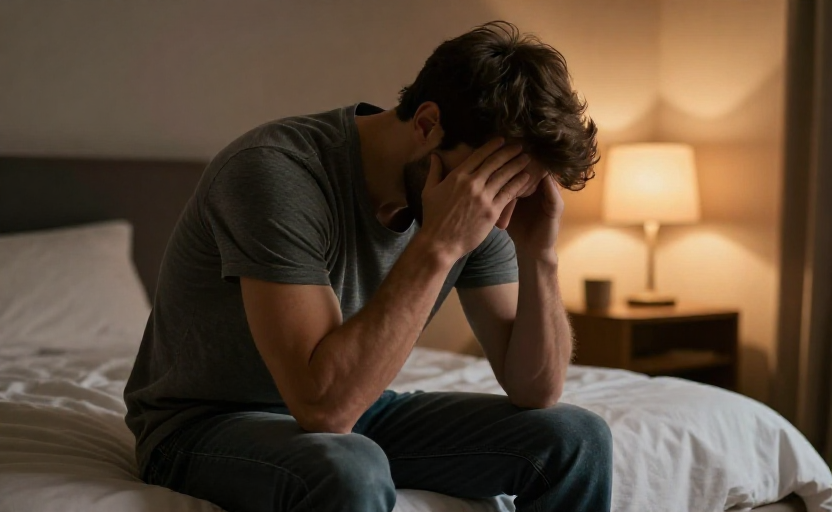
Sexual anxiety can creep in quietly, showing up long before you're in the bedroom. It might start as a worry about performance, a fear of not pleasing your partner, or a nagging thought that something's wrong with you. Over time, that anxiety can begin to affect your body in real, physical ways — including your ability to get and keep an erection.
Here are three warning signs that sexual anxiety could be playing a bigger role in your erectile health than you think.
1. You're Usually Fine in the Morning — but Not at Night
One of the clearest signs that your erections are being affected by anxiety rather than a physical condition is the presence — or absence — of morning erections.
If you wake up with a firm erection most mornings but struggle to get or maintain one during partnered sex, that's a strong clue that psychological factors are at play. Morning erections happen during REM sleep, when your brain is relaxed and your body isn't under conscious stress. If that process works fine, your vascular and neurological systems are most likely healthy.
The issue is likely happening between your ears, not below your belt. Performance anxiety, fear of rejection, or pressure to "perform" can send stress hormones like cortisol and adrenaline surging through your body. Those hormones cause blood vessels to constrict, which directly works against the relaxation needed for an erection.
2. You Worry About Erections Before You Even Start
Anxiety often has a predictable script: you imagine the worst before it happens. If you find yourself thinking about erectile failure hours before you might become intimate — or even days ahead — that worry is likely doing real damage.
This type of anticipatory anxiety creates a vicious cycle. The more you worry about losing your erection, the more your body stays in a mild state of fight-or-flight. When you finally get to a sexual moment, you're already tense, distracted, and disconnected from the physical sensations that lead to arousal. Instead of being present with your partner, you're monitoring your own body for signs of failure.
This self-monitoring, sometimes called "spectatoring," pulls your focus away from pleasure and toward performance. It's one of the fastest ways to sabotage erections.
Tip: If you catch yourself mentally rehearsing failure before intimacy begins, it's a strong sign that anxiety — not a physical issue — is driving the problem.
3. The Problem Only Shows Up With a Partner — Not Alone
If you can get and maintain an erection during masturbation without any trouble, but struggle when you're with a partner, that's another major red flag for anxiety-driven erectile difficulties.
Solitary arousal is typically pressure-free. There's no one to impress, no expectation to perform, and no fear of judgment. When a partner enters the picture, the stakes feel higher. You may worry about your size, your stamina, or whether you'll last long enough. This kind of social pressure can hijack your nervous system, making it harder for your body to relax enough to allow blood flow into the penis.
Erections depend on the parasympathetic nervous system — the "rest and digest" mode. Anxiety switches you into sympathetic mode ("fight or flight"), which is the opposite of what your body needs for arousal. If anxiety is situational — only appearing in partnered settings — then the cause is almost certainly psychological, not physical.
What to Do About Sexual Anxiety and Erection Problems
Recognizing that anxiety is part of the picture is the first step. Here's what to consider next.
Talk to a therapist
A sex therapist or a therapist trained in cognitive behavioral therapy (CBT) can help you untangle the thought patterns that fuel performance anxiety. Therapy is often very effective for situational erectile dysfunction that has a psychological root.
Talk to your partner
Keeping your worry a secret usually makes it worse. Letting your partner know you've been feeling anxious can relieve a huge amount of pressure. Often, partners are much more understanding than we expect, and simply sharing the burden can reduce the anxiety enough to break the cycle.
Practice being present
Instead of focusing on erections, focus on sensation. Slow down, breathe, and pay attention to touch, smell, and sound. If your mind drifts to worry, gently bring it back to the physical moment. This is a form of mindfulness, and it directly counteracts the mental habits that feed sexual anxiety.
Check in with a doctor
Even if you suspect anxiety is the cause, it's smart to rule out physical contributors like low testosterone, high blood pressure, diabetes, or medication side effects. A simple checkup can give you peace of mind and help you create a more targeted plan.