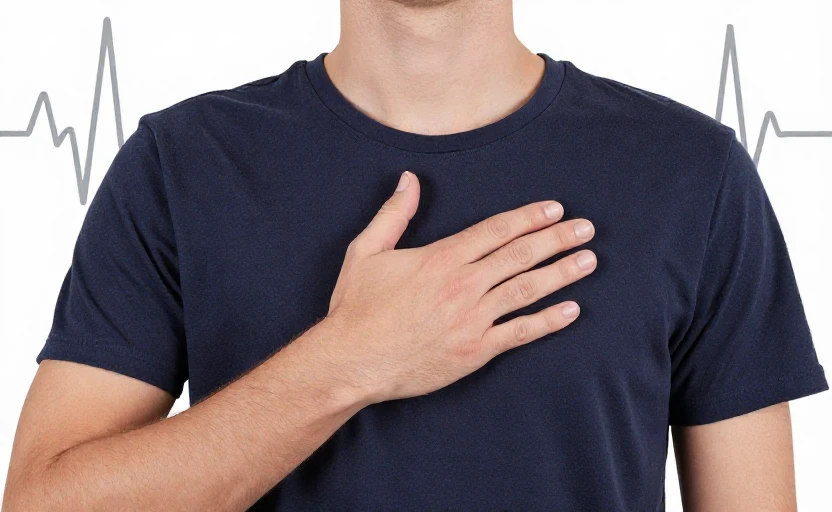
You’re sitting quietly, maybe reading or watching television, when you become aware of your own heartbeat. It might feel like a brief flutter, a skipped beat, or a sudden hard thump in your chest. For a moment, your attention narrows to that internal rhythm. This sensation—heart palpitations—is incredibly common and often harmless, tied to stress, caffeine, or fatigue. But sometimes, these fleeting feelings carry a quieter message, one that asks for a closer listen.
Most palpitations are benign, a temporary hiccup in your heart’s electrical system. The challenge lies in distinguishing the ordinary from the noteworthy. While chest pain or fainting are clear red flags, other signals are more nuanced, easily brushed aside as nothing. Learning to recognize these subtler warnings empowers you to partner with your health, turning a moment of worry into an opportunity for clarity and care.
What does a “warning sign” palpitation feel like?
It’s less about a single odd beat and more about the character and context of the experience. A warning sign often involves a pattern or is accompanied by other sensations that, together, suggest your heart is struggling to maintain its steady, efficient rhythm.
The heart’s job is to be a reliable, quiet engine. When it makes itself known in certain ways, it’s worth understanding why.
The subtle signs you should notice
1. Palpitations that arrive with lightheadedness or a wave of weakness
Feeling a little dizzy when you stand up quickly is one thing. But when a spell of palpitations brings on a distinct, sudden lightheadedness, unsteadiness, or a draining feeling of weakness—without an obvious trigger—it’s a meaningful combination. This pairing can indicate that the irregular rhythm is briefly affecting how much blood your heart is pumping to your brain.
It’s that specific sequence that matters: the palpitation and the lightheadedness occurring together. You might feel like you need to sit down immediately or steady yourself against a wall. It’s not a full faint, but a clear step in that direction, signaling that the heart’s rhythm may be compromising its output just enough for you to notice.
2. A rapid, pounding rhythm that starts and stops abruptly
We all experience a faster heartbeat during exercise or excitement. The concerning pattern is different: a heart rate that rockets from normal to very fast (often feeling like a fluttering or pounding in the chest) for no apparent reason, and then stops just as suddenly, often with a noticeable hard thud or pause.
This “on-off switch” quality is a hallmark of certain arrhythmias, like supraventricular tachycardia (SVT). The abrupt start and stop can be startling. It might last seconds or hours. The key is the lack of a gradual build-up and the jarring, definitive end. It feels less like your heart is working hard and more like it has suddenly taken on a mind of its own.
3. Palpitations accompanied by unusual shortness of breath at rest
Getting winded while climbing stairs is expected. Struggling to catch your breath while you’re sitting in a chair or lying in bed, especially when it coincides with palpitations, is a subtler sign. This isn’t the breathlessness of anxiety, which often feels like you can’t get a deep breath in. This feels more like you can’t get enough air despite normal breathing, sometimes with a sense of pressure or fullness in the chest.
This combination suggests the irregular heartbeat may be affecting the heart’s efficiency in moving blood through the lungs. It’s a sign that the palpitations are more than just an electrical blip; they are impacting a basic function. If you find yourself needing to sit upright or prop yourself up with pillows to breathe comfortably during these episodes, take note.
What to do if you recognize these signs
First, stay calm. Anxiety can worsen palpitations. Find a place to sit down and try to take slow, deep breaths. Pay attention to the details: When did it start? What exactly does it feel like? Are there any other sensations?
Your next step is to make an appointment with your doctor or a cardiologist to discuss what you experienced. This is not necessarily an emergency room visit unless the symptoms are severe, worsening, or include crushing chest pain, fainting, or severe shortness of breath.
To prepare for your visit, it can be incredibly helpful to track the episodes. Note:
- The date and time
- What you were doing when they started
- How long they lasted
- Exactly what they felt like (flutter, pound, skip)
- Any accompanying symptoms (lightheadedness, etc.)
Your doctor will likely start with a conversation and a physical exam. They may recommend tests like an electrocardiogram (ECG) to check your heart’s rhythm, a Holter monitor you wear for 24-48 hours to catch an episode, or an echocardiogram (an ultrasound of the heart) to check its structure. These are safe, non-invasive ways to look for clues.
Common, often harmless causes of palpitations
It’s crucial to remember that most palpitations are not caused by serious heart problems. Common triggers include:
- Stress and anxiety: The body’s fight-or-flight response releases adrenaline, which can irritate the heart’s rhythm.
- Stimulants: Caffeine (in coffee, tea, soda, energy drinks), nicotine, and certain cold medications.
- Hormonal changes: Fluctuations during menstruation, pregnancy, or menopause.
- Vigorous exercise.
- Dehydration or electrolyte imbalance.
Often, managing these triggers—cutting back on caffeine, practicing stress-reduction techniques, staying hydrated—can significantly reduce episodes. The goal of recognizing the subtle warning signs isn’t to foster fear, but to provide a clearer map for when simple lifestyle adjustments might not be enough and a professional opinion is the wisest path forward.
Your heart’s rhythm is a vital sign you can learn to listen to. Those subtle warnings are not meant to be ignored, but understood. They are an invitation to tune in, seek clarity, and ensure the quiet engine within you continues to run smoothly for all the moments to come.