

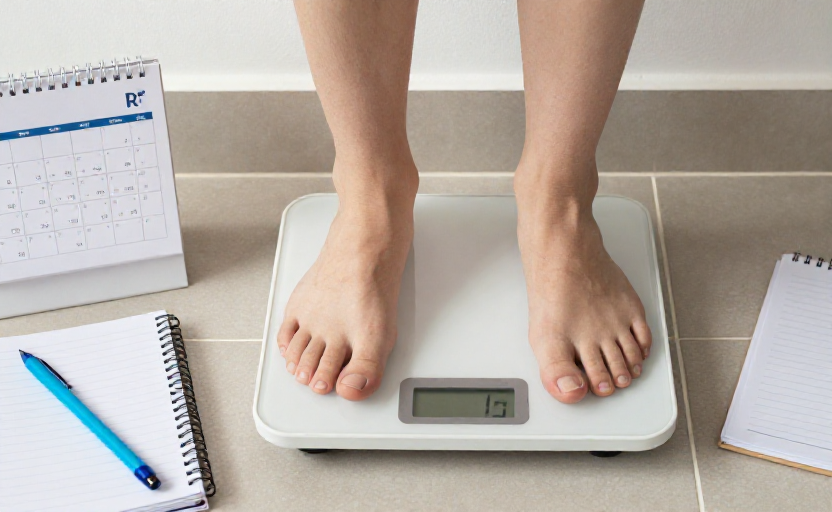
If you are managing a thyroid condition, stepping on the scale can feel like a loaded ritual. One week the number drops; the next, it climbs back up despite your best efforts. Weight fluctuations are a well-known symptom of both hypothyroidism and hyperthyroidism, and tracking these changes is often a key part of understanding how well your treatment plan is working. However, the way you track matters. Common tracking errors can give you misleading data, causing unnecessary stress or causing you to overlook important health signals.
Let’s cut through the noise. As a health editor who has spoken with endocrinologists and certified dietitians specializing in thyroid care, I’ve seen the same three pitfalls trip up patients time and again. Here is what to avoid—and what to do instead—so your weight log actually supports your thyroid health journey.
Mistake #1: Weighing Yourself at Different Times of Day
Our body weight naturally fluctuates by several pounds over the course of a single day due to hydration, food intake, and waste elimination. For someone with a thyroid disorder, these daily swings can be even more pronounced due to fluid retention linked to hormone imbalances. If you weigh yourself in the morning on Monday, after lunch on Tuesday, and again before bed on Wednesday, you aren’t tracking thyroid-related weight change—you’re tracking your digestion and water consumption.
The fix: Pick one consistent window. The gold standard is the first thing in the morning, after you use the bathroom, before you eat or drink anything, and wearing the same amount of clothing (or none). This baseline removes the variables of food, fluid, and gravity. Write that single figure down. Ignore the number at any other time of day—it is noise, not data.
Mistake #2: Obsessing Over the Daily Number
When you are looking for proof that your thyroid medication dosage is correct or that diet changes are working, it is tempting to stare at the scale every morning. But here is the reality: even with perfect conditions, a normal hormonal cycle, salt intake, or a high-fiber meal from the night before can mask true fat loss or gain for two to three days. For thyroid patients, whose metabolic rate can change slowly, daily weigh-ins often produce a chaotic zigzag graph that tells you nothing useful.
The fix: Adopt a weekly or twice-weekly weighing schedule. Step on the scale on the same day or two each week (for example, Wednesday and Saturday mornings). This smooths out the day-to-day noise. Then, watch for a trend over three to four weeks rather than celebrating or panicking over a single measurement. A downward or upward slope over a month is meaningful; a 2-pound jump overnight is almost certainly fluid or food, not a thyroid crisis.
Tip: Pair your weight trend with how your clothes fit and your energy levels. The scale doesn’t capture changes in muscle mass or water retention, both of which are common in thyroid conditions.
Mistake #3: Ignoring the Signs of Fluid Retention and Inflammation
One of the most distinctive features of hypothyroidism is myxedema, a type of puffiness caused by the accumulation of glycosaminoglycans (sugary molecules) in the skin. This is not “regular” fat. It can make the scale go up or stay stubbornly high even when a patient is eating well and exercising. Conversely, starting thyroid medication can trigger a “whoosh” of fluid loss that looks like rapid weight loss on the scale. If you don’t account for this, you might wrongly attribute the drop to a new diet or panic when the scale doesn’t budge during a flare-up.
The fix: Look beyond the number. When tracking weight for thyroid health, add a simple note about how you feel physically. Are your ankles swollen? Is your face puffy in the morning? Do your rings feel tight? These are clues that the number on the scale may be reflecting fluid, not body fat. For a more complete picture, consider tracking your waist and neck circumference with a soft measuring tape once a month. Changes in these measurements can indicate true tissue changes that the scale misses.
How to Build a Smarter Tracking Routine
Now that you know what to avoid, here is a simple framework to apply today:
- Weigh once weekly, on the same day and time, in minimal clothing, post-bathroom, pre-food.
- Use a spreadsheet or dedicated app that shows a rolling average or trend line, not just raw numbers.
- Record one non-scale symptom each week (energy, sleep quality, or digestive regularity).
- Share your data with your endocrinologist during medication adjustment visits. A chart of steady weight gain over several months, despite consistent eating, is a stronger signal than a single high reading.
Remember that your thyroid condition is a long-term partner, not a quick fix. Honest, consistent tracking—free of these three common mistakes—gives you actionable insight without the emotional rollercoaster. Focus on the trend, not the day, and your tracking will become a tool for empowerment rather than a source of anxiety.








