Recovering from a heart attack is a profound experience that reshapes how you think about food. Dinner, in particular, becomes more than just a meal — it’s a chance to nourish your cardiovascular system, reduce inflammation, and support steady blood pressure overnight. These three recipes are designed with those goals in mind: they are low in sodium, saturated fat, and added sugars, yet rich in fiber, potassium, and omega-3s. Each dish is straightforward to prepare, uses familiar ingredients, and keeps the focus on flavor that feels satisfying, not restrictive.
Why dinner matters for heart recovery
During the post-heart attack phase, your body is working hard to heal. The end of the day is a critical window: a heavy, salty, or high-fat meal can spike blood pressure and triglycerides, while a balanced dinner can promote overnight cardiac repair. Prioritizing vegetables, whole grains, lean protein, and healthy fats at dinner helps maintain stable blood sugar and supports healthy cholesterol levels. These three recipes are intended to be rotated into a weekly plan, not as a rigid prescription, but as a foundation of meals that taste good and feel healing.
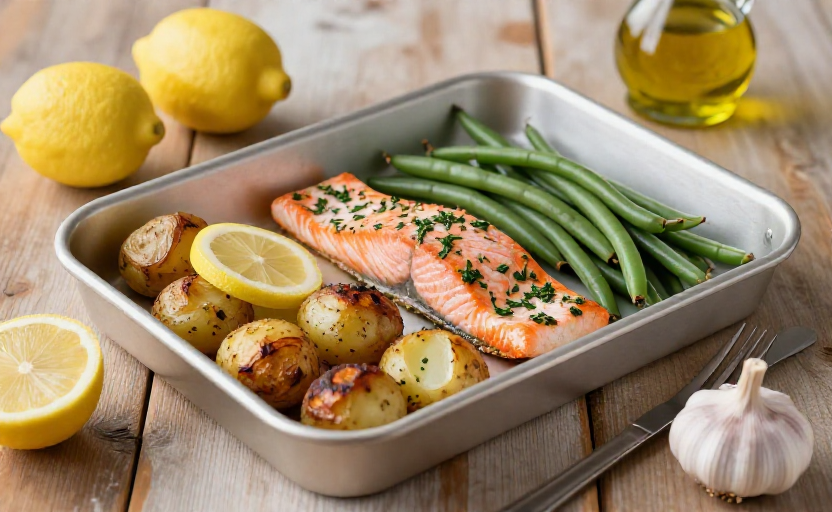
1. Lemon-herb salmon with roasted potatoes and green beans
This sheet-pan dinner delivers omega-3 fatty acids (which help lower triglycerides and reduce inflammation) alongside fiber from green beans and resistant starch from potatoes that are roasted with skin on. The gentle acid from lemon brightens the dish without adding sodium.
Ingredients (serves 2)
- 2 salmon fillets (4–6 oz each), skin on or off
- 1 lb small Yukon Gold or red potatoes, halved
- 1 lb fresh green beans, trimmed
- 2 tablespoons extra-virgin olive oil
- Juice and zest of 1 lemon
- 2 cloves garlic, minced
- 1 teaspoon dried oregano or thyme
- Freshly ground black pepper to taste
How to make it
- Preheat oven to 400°F (200°C). Line a sheet pan with parchment.
- Toss potatoes with 1 tablespoon olive oil, half the garlic, and a pinch of pepper. Roast for 20 minutes.
- Meanwhile, whisk the remaining olive oil, lemon juice, zest, oregano, and pepper. Place salmon and green beans on the pan next to the potatoes. Drizzle the lemon-herb mixture over the salmon and beans.
- Roast everything together for another 12–15 minutes, until salmon flakes easily and green beans are tender-crisp.
- Serve immediately, with extra lemon wedges on the side.
Cook’s note: If you want more texture, sprinkle a tablespoon of slivered almonds over the green beans in the last 5 minutes of roasting.
2. White bean and kale minestrone with whole-grain pasta
A warm bowl of minestrone is deeply satisfying and packed with plant-based protein, soluble fiber from beans, and potassium-rich vegetables. This version uses low-sodium broth and skips the cheese, keeping saturated fat low while still delivering a savory, umami-rich flavor.
Ingredients (serves 4)
- 2 tablespoons olive oil
- 1 yellow onion, diced
- 3 carrots, diced
- 3 celery stalks, diced
- 4 cloves garlic, minced
- 1 can (15 oz) low-sodium cannellini beans, rinsed and drained
- 1 can (15 oz) no-salt-added diced tomatoes
- 6 cups low-sodium vegetable or chicken broth
- 2 cups chopped kale (stems removed)
- 1 cup whole-grain ditalini or small shell pasta
- 1 teaspoon dried basil
- ½ teaspoon dried rosemary
- Freshly ground black pepper to taste
How to make it
- Heat olive oil in a large pot over medium heat. Add onion, carrots, and celery; cook 6–8 minutes until softened.
- Stir in garlic, basil, and rosemary; cook 1 minute more.
- Add beans, tomatoes, and broth. Bring to a gentle boil, then reduce to a simmer.
- Stir in pasta and cook according to package directions (about 8–10 minutes).
- Add kale in the last 2 minutes of cooking, stirring until wilted. Season with pepper.
- Ladle into bowls and serve. A dash of nutritional yeast (optional) adds a cheese-like note without sodium.
Cook’s note: This soup thickens as it sits. If you have leftovers, add a splash of water or broth when reheating.
3. Turkey and quinoa stuffed bell peppers
Stuffed peppers are a complete meal in a single package. Lean ground turkey provides high-quality protein without much saturated fat, while quinoa offers all nine essential amino acids plus magnesium (important for blood pressure regulation). The bell peppers themselves deliver a generous dose of vitamin C.
Ingredients (serves 4)
- 4 large bell peppers (any color), tops cut off and seeds removed
- 1 lb lean ground turkey (93/7 or leaner)
- 1 cup cooked quinoa (from about ½ cup dry)
- 1 small onion, diced
- 2 cloves garlic, minced
- 1 can (14.5 oz) no-salt-added diced tomatoes, drained
- 1 teaspoon smoked paprika
- ½ teaspoon ground cumin
- Freshly ground black pepper to taste
- 2 tablespoons chopped fresh parsley or cilantro (for garnish)
How to make it
- Preheat oven to 375°F (190°C). Bring a large pot of water to a boil. Blanch the peppers for 3 minutes, then drain and set aside.
- In a skillet over medium heat, cook the turkey, breaking it apart, until no longer pink (5–6 minutes). Add onion and garlic; cook 3 more minutes.
- Stir in the drained tomatoes, quinoa, smoked paprika, cumin, and pepper. Cook 2 minutes to blend flavors.
- Stuff each pepper with the turkey-quinoa mixture. Place peppers upright in a baking dish just large enough to hold them. Add ½ cup water to the bottom of the dish.
- Cover with foil and bake 30 minutes. Uncover and bake 10 more minutes.
- Garnish with parsley and serve warm.
Tip: Pair any of these dinners with a simple side salad (mixed greens, lemon juice, a drizzle of olive oil) to add another serving of vegetables.
Building a heart-healthy dinner habit
Consistency matters more than perfection. If you have one heavy takeout meal, simply return to these recipes the next evening. The patterns that protect your heart — less sodium, more fiber, moderate portions — accumulate over weeks and months. Share these meals with family or friends; cooking for others can be part of emotional recovery as well.
Always consult your cardiologist or a registered dietitian before making major dietary changes after a heart attack, especially if you are on blood thinners (which interact with vitamin K found in leafy greens) or have fluid restrictions. These recipes are designed to align with general heart-health guidelines from the American Heart Association, but your individual needs may vary.