

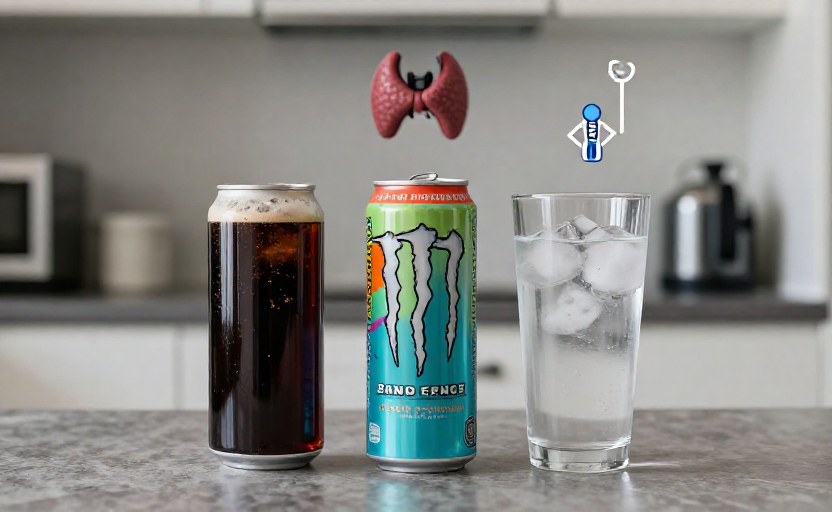
When you hear about thyroid health, the conversation usually revolves around food—like getting enough iodine or selenium. But what you drink matters just as much. The right beverage can support your metabolism and thyroid function; the wrong one can quietly throw things off balance. According to registered dietitians who specialize in hormone health, three common drinks stand out for their ability to interfere with thyroid function and disrupt metabolic processes.
The tricky thing is that many of these beverages are everyday staples that people reach for without a second thought. Some are touted as healthy by influencers, while others are so embedded in morning routines that giving them up feels unthinkable. But the data connecting specific drinks to thyroid suppression and metabolic slowdown is solid—and knowing the mechanism behind each one can help you make an informed choice without resorting to extremes.
1. Diet Soda and Artificially Sweetened Beverages
Diet soda is the most common offender that dietitians flag, largely because of its widespread use and the misunderstanding that it’s a harmless or even helpful choice for weight management. The problem is not the carbonation; it’s the artificial sweeteners—specifically aspartame, sucralose, and saccharin.
One of the most well-documented effects of these sweeteners is their impact on insulin and glucose regulation. When your taste buds detect sweetness, your brain signals the pancreas to release insulin—even if no sugar actually arrives. Over time, this constant mismatch can lead to insulin resistance, which directly influences thyroid hormone conversion. The thyroid produces mostly T4 (the inactive form), which must be converted to T3 (the active form) in the liver and other tissues. Insulin resistance impairs that conversion, leaving you with a sluggish metabolism and a thyroid that isn’t working efficiently.
There’s also a lesser-known but significant concern: aspartame has been shown in some studies to suppress TSH (thyroid-stimulating hormone) secretion and reduce circulating T3 levels. While these studies are often small or done in animals, the pattern is consistent enough that many endocrinologists and functional dietitians recommend limiting intake as a precaution.
What to do instead
If you crave carbonation, try sparkling water with a splash of lemon or lime. For those who need sweetness, stevia-based beverages (in moderation) or monk fruit sweeteners are better alternatives that don’t trigger the same insulin response. But the cleanest swap is plain water or unsweetened herbal tea.
2. Regular Energy Drinks
Energy drinks are a different beast entirely. They don’t just contain caffeine—they contain massive doses of it, often combined with other stimulants like taurine, guarana, and ginseng. For the thyroid, the issue is chronic adrenal and HPA axis (hypothalamic-pituitary-adrenal axis) disruption.
Here’s the physiological chain reaction: High-dose caffeine and stimulants keep your stress response turned on. Your adrenal glands produce cortisol, which at normal levels is fine and even necessary. But when cortisol stays high for long stretches—which can happen with daily energy drink consumption—it begins to inhibit thyroid function at multiple points. High cortisol reduces TSH release from the pituitary gland, decreases the conversion of T4 to T3, and increases the production of reverse T3 (rT3), a inactive form that blocks the active T3 from binding to receptors.
If your thyroid lab values look normal but you feel exhausted, bloated, and cold, elevated reverse T3 might be the hidden issue—and energy drinks are a known contributor to that imbalance.
The metabolic effects are equally concerning. The spike in blood pressure and heart rate from energy drinks can create a temporary increase in calorie burn, but this is followed by a crash that leaves your metabolism lower than baseline for hours. Over time, the net effect is a slower resting metabolic rate.
What to do instead
If you need energy, start with sleep quality and hydration. Green tea or black tea provides a moderate amount of caffeine (50-70 mg per cup) along with L-theanine, an amino acid that promotes calm focus without the adrenal spike. Matcha is another good option because of how the powder delivers a slower release of caffeine combined with protective antioxidants that support liver detoxification pathways—important for thyroid hormone metabolism.
3. Iced or Chilled Water (Wait, hear this out)
This one sounds surprising, and it’s not about a hidden chemical or toxin—it’s about traditional dietary perspectives on metabolism. In both Traditional Chinese Medicine (TCM) and Ayurveda, consuming very cold beverages—especially with meals—is considered a significant stressor on digestive and metabolic function. While Western dietitians once dismissed this as folklore, there is emerging evidence that temperature and digestion are more connected than we thought.
The mechanism is thermoregulation. When you drink ice-cold liquid, particularly in large amounts, your body expends energy to warm that liquid to core temperature. This is not inherently bad, and in fact slightly increases calorie burn briefly. However, the concern is more about meal timing: if you drink iced water with a meal, the cold temperature can cause blood vessels in the stomach lining to constrict (vasoconstriction) and slow down digestive secretions. Slower digestion means less efficient nutrient absorption—and nutrients like iodine, zinc, and selenium are critical for thyroid hormone production.
There’s also a hormonal angle. Some research suggests that chronic exposure to cold stimuli during eating can increase activity in the sympathetic nervous system (fight-or-flight), which competes with the parasympathetic nervous system (rest-and-digest) that is needed for proper digestion. When your body is in sympathetic-dominant mode, thyroid function takes a back seat to survival priorities.
This does not mean you should never drink cold beverages. But if you are actively trying to support a sluggish thyroid or improve your metabolic rate, switching to room temperature or warm water, especially during meals, is a simple, zero-cost change that many dietitians recommend.
What to do instead
Start your day with warm lemon water. Drink herbal teas like ginger, peppermint, or chamomile at room temperature or warm. If you enjoy cold water for taste, try keeping it at cool (not iced) temperature, and avoid drinking large amounts of it during your main meals.
The Bigger Pattern
If you look at all three drinks together, a common thread emerges: they all interfere with the body’s ability to regulate energy and hormonal signaling. Diet soda disrupts insulin and liver function, energy drinks spike cortisol and suppress active thyroid hormone, and very cold water can compromise digestive efficiency and stress hormone balance.
Dietitians emphasize that these effects are cumulative and dose-dependent. One diet soda per week is unlikely to cause thyroid dysfunction. But drinking one or more energy drinks daily while habitually consuming artificially sweetened beverages is a different story. The goal is not perfection—it’s awareness.
Your thyroid is a sensitive organ that responds to the environment you create through your daily habits. Small, consistent changes in what you drink can have a meaningful impact on your energy levels, weight regulation, and overall metabolic health.








