If you or someone you know has been diagnosed with obstructive sleep apnea (OSA), you know the routine: a CPAP machine, a mask, and the hope of a good night's sleep. Yet for many, treatment feels like a battle. The machine sits on the nightstand, the mask gathers dust, and the morning fatigue doesn't budge.
While sleep apnea is a complex medical condition, two very common, day-to-day mistakes often trip people up. They aren't about the severity of your apnea or your anatomy—they are about habits and products that quietly undermine your therapy. Here is what they are, and how to work around them.
Mistake #1: The evening alcohol habit (even just one drink)
Many people unwind with a glass of wine or a beer after dinner. If you have sleep apnea, that small ritual might be undoing much of your CPAP therapy. Alcohol is a central nervous system depressant. It relaxes the muscles in your throat and soft palate far more than natural sleep does. For someone with OSA, this means the airway is more likely to collapse completely.
But it doesn't stop there. Alcohol also blunts your arousal response. Normally, if you stop breathing, your brain wakes you up just enough to gasp and restart breathing. Alcohol makes that protective reflex sluggish. The result? Longer, more severe apnea events, lower oxygen saturation, and a longer time in dangerous hypoxic states—even if you are wearing your CPAP at the correct pressure.
One study in the journal Sleep found that even moderate alcohol consumption before bed significantly worsened the apnea-hypopnea index (AHI) in people with mild to moderate OSA. Your machine may log a lower compliance score, but the real damage is in the quality of your sleep and your cardiovascular strain.
Try this instead: Limit alcohol to at least three hours before bed. If you must have a drink, treat it as an earlier-evening event, not a nightcap. Skip alcohol completely on nights when your apnea symptoms feel worse.
Mistake #2: Sleeping on your back (supine position)
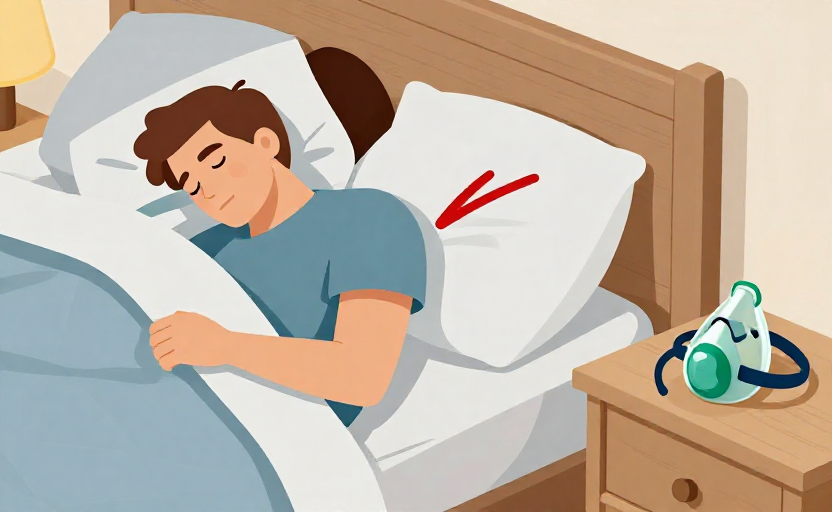
Position matters more than most people realize. When you lie flat on your back, gravity pulls your soft palate, tongue, and even your jaw backward, narrowing the airway. This is called supine-position dependent sleep apnea, and it is very common. In fact, many people with mild or moderate OSA find their AHI doubles—or triples—when they roll onto their back.
If you wake up in the middle of the night on your back, you might not remember it. But your CPAP machine often does. Leak data, flow limitations, and pressure spikes all increase when you are supine. The machine may be working harder, but your airway anatomy is fighting it.
This is not just about using a regular pillow. The solution requires a dedicated positional therapy approach. A flat pillow under your head doesn't stop you from rolling onto your back. A contour pillow or a cervical support pillow might help keep your neck aligned, but it does not prevent supine sleep.
Try this instead: Use a positional therapy device. These include wearable belt-like bands (vibrating when you roll onto your back), a backpack-style pillow, or even a simple tennis ball sewn into the back of a t-shirt. The goal is to keep you on your side throughout the night. Many people find a side-sleeping pillow with a high loft and a cutout for the shoulder helps maintain the position comfortably.
How these two mistakes interact
Here is where it gets tricky: alcohol and supine sleeping compound each other. A drink before bed relaxes your throat muscles, and then you lie on your back. The combination can make a mild apnea case feel severe, or turn a well-controlled patient into someone with a high residual AHI despite good CPAP compliance.
If you are using your CPAP faithfully but still feel exhausted, check these two factors first. You might be surprised at how much of a difference a simple positional change and a no-alcohol window before bed can make.
When to talk to your sleep specialist
Addressing these two mistakes is something you can try at home, but if your symptoms persist—loud snoring, gasping, morning headache, daytime sleepiness—do not rely on self-management alone. Your CPAP pressure might need adjustment, or you might have other factors like nasal congestion, weight changes, or dental issues affecting your therapy. Always report changes in your symptoms to your sleep medicine provider.
Your sleep apnea is a chronic condition that requires active care. Small, intentional changes—like skipping the nightcap and sleeping on your side—can tip the balance from struggling through the night to actually resting.