
For years, the standard approach to checking for arterial plaque involved imaging procedures like coronary calcium scans or CT angiograms. While these tests are effective, they come with cost, radiation exposure, and the hassle of scheduling. More and more people are asking: Is there a way to keep an eye on plaque buildup without going through an invasive or high-tech procedure?
Two strategies have emerged as practical, scientifically grounded methods for monitoring cardiovascular risk from the comfort of your routine. They don't replace a doctor's diagnosis, but they do give you—and your physician—actionable signals about what's happening inside your arteries.
1. Track Your Lipoprotein(a) and ApoB Levels
Standard lipid panels measure total cholesterol, LDL, HDL, and triglycerides. But these don't tell the whole story. Two more specific markers can give you a clearer picture of plaque formation risk.
Lipoprotein(a)—often called Lp(a)—is a sticky, genetically determined particle that is highly atherogenic (promotes plaque buildup). Unlike your LDL, which fluctuates with diet and exercise, Lp(a) is largely hereditary and stays relatively stable over time. A single blood test is all it takes to establish your baseline. The American Heart Association notes that elevated Lp(a) is a significant risk factor for aortic stenosis and coronary artery disease.
Apolipoprotein B (ApoB) is the main protein on every particle that can penetrate artery walls and deposit cholesterol. Measuring ApoB tells you the total number of these atherogenic particles, which is a more nuanced risk marker than LDL cholesterol alone. Some experts consider ApoB a better predictor of cardiovascular events.
These are simple blood draws—no fasting is even required for Lp(a) or ApoB. You can get them added to your next annual blood work. The result gives you a baseline number you can track over the years.
If your levels are high, you and your doctor can develop a plan—whether that's more aggressive lipid management, lifestyle changes, or simply scheduling a follow-up scan a year or two down the road. The beauty is that monitoring the numbers doesn't require sedation, needles in your arm is the only discomfort.
2. Use a Home Blood Pressure Monitor with Pulse Wave Analysis
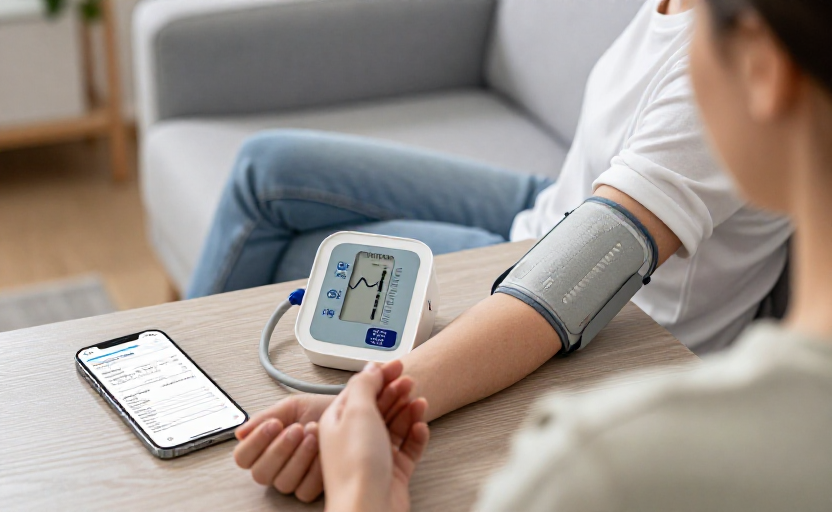
Blood pressure cuffs have been around forever, but newer home monitors offer a second, more advanced feature: pulse wave analysis. These devices measure not only systolic and diastolic pressure but also arterial stiffness and augmentation index.
Arterial stiffness is a real-time proxy for vascular health. As plaque builds up, artery walls become less flexible. A high augmentation index suggests that your arteries are struggling to absorb the pulse of blood from each heartbeat, which means the heart is working harder than it should. Research has shown that increased arterial stiffness is an independent predictor of cardiovascular events and can precede visible plaque on imaging.
Using one of these monitors at home—ideally at the same time each morning, after emptying your bladder, before eating or drinking—gives you a trend, not just a snapshot. You're looking for a slow, creeping upward trend in stiffness values, which might indicate that plaque progression is happening inside the artery wall.
How to interpret your home data
No single reading is diagnostic. You're looking for trends over weeks and months. If your augmentation index rises 5% over a year, or your pulse wave velocity (another metric some monitors provide) increases beyond age-expected norms, that's a signal to have a deeper conversation with your provider.
Why these strategies are not replacements
Let's be clear: The two strategies described above are monitoring tools, not diagnostic tests. They help you and your doctor decide when a more advanced imaging study is warranted. For example, if your ApoB is high and your arterial stiffness is climbing, your doctor might order a coronary artery calcium (CAC) scan to see if plaque is actually present.
But by tracking these markers annually, you can avoid unnecessary scans and radiation exposure until the trend justifies it. It's a smarter, more personalized way to manage cardiovascular risk.
Putting it all together
- Step one: Ask your doctor to add Lp(a) and ApoB to your next blood draw. Write down the results and keep a record.
- Step two: Invest in a clinically validated home blood pressure monitor that offers pulse wave analysis or augmentation index (Omron, Withings, and some models from A&D are common options).
- Step three: Take readings three to five times a week, at the same time and under the same conditions. Log them with a simple spreadsheet or app.
- Step four: Share your trend data with your primary care provider or cardiologist at each annual checkup.
These strategies are not a substitute for medical advice, but they are a powerful way to take an active, informed role in your vascular health without relying solely on invasive imaging. The data you gather is valuable context—not a diagnosis.