Nearly three-quarters of pregnant people experience back pain at some point during their pregnancy. While some discomfort is expected as your body changes, certain everyday habits can turn manageable aches into persistent, sharp pain. The good news is that by recognizing two common missteps—and swapping them for simple, safer alternatives—you can significantly reduce strain on your spine and pelvic floor.
Mistake #1: Bending From the Waist
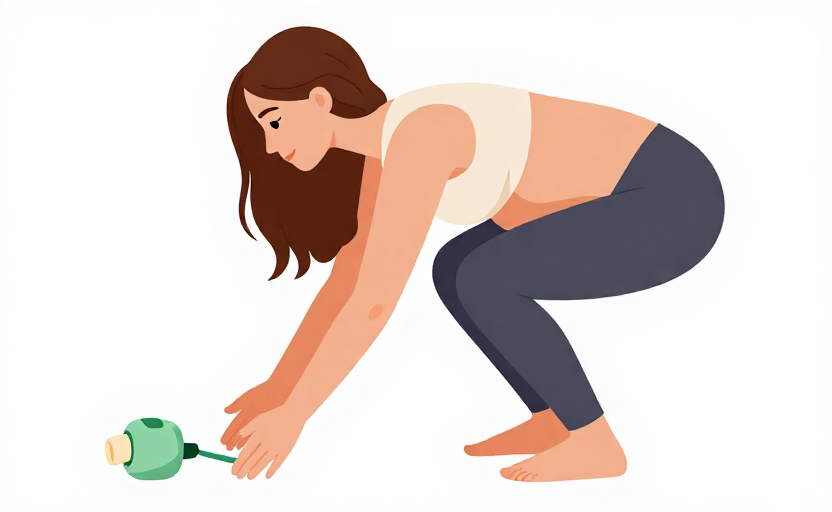
As your belly grows, your center of gravity shifts forward. If you bend at the waist to pick up a dropped item, tie your shoes, or lift a toddler, you place enormous leverage on your lower back. The pregnancy hormone relaxin loosens your ligaments, making your joints more mobile—and more vulnerable to injury. Bending from the waist multiplies the load on your lumbar spine by roughly 10 times compared to using your legs.
What to do instead: Use a wide squat or a lunge
Instead of hinging at your hips, bend your knees and keep your back straight. A deep, wide squat lets your legs take the weight. For a quick pickup, step forward into a lunge position with one foot, keeping your torso upright. If you struggle to squat (especially later in pregnancy), lower yourself onto one knee while keeping your other foot flat. This technique keeps your spine neutral and spares your lower back.
Quick tip: When lifting anything—even a lightweight grocery bag or laundry basket—brace your core gently, exhale on the effort, and keep the object close to your belly.
Mistake #2: Sitting Without Support
Pregnancy often means more time sitting—at a desk, in the car, or resting on the couch. Without proper support, most chairs encourage a slumped or tucked pelvis position. This tilts your pelvis backward (posterior pelvic tilt), compresses the discs in your low back, and strains your glutes and hamstrings. Over hours, this posture can trigger or intensify sciatica-like pain that radiates down the leg.
What to do instead: Build a pregnancy-friendly sitting station
You don’t need an expensive ergonomic chair. Start with a small rolled towel or lumbar cushion placed at the curve of your lower back. Keep both feet flat on the floor or on a footrest—dangling legs pull on your hips. Avoid crossing your legs, which rotates the pelvis unevenly. Stand and walk for 2–3 minutes every 30–45 minutes to reset your spine. In the car, adjust your seat so your knees are level with or slightly lower than your hips, and place a small cushion behind you if needed.
Additional habits that make a big difference
Beyond these two corrections, a few daily adjustments can further protect your back:
- Sleep on your side with a pillow between your knees. This keeps your pelvis aligned and prevents your top leg from pulling your spine out of position. A full-length pregnancy pillow can also cradle your belly and back.
- Wear flat, supportive shoes. Heels and unsupportive flats tilt your pelvis forward or backward. Try a shoe with a slight arch support and a wider toe box.
- Engage your deep core muscles during movement. Think of gently pulling your belly up and in—about 20% of your maximum effort—when standing up, rolling over in bed, or reaching overhead.
- Avoid heavy twisting. When reaching for something on the passenger seat or behind you, pivot your whole body instead of twisting your spine.
When to talk to your provider
Back pain during pregnancy is common, but certain symptoms need medical attention. If you experience sharp, sudden pain; pain accompanied by vaginal bleeding, fever, or burning with urination; or numbness/weakness in your legs or groin, contact your obstetrician or midwife. Also seek guidance if pain keeps you from sleeping or performing daily activities despite trying the posture fixes above.
Small postural changes—bending with your legs and sitting with support—can dramatically lower the strain on your spine, allowing you to move through your pregnancy with more comfort and less pain.