
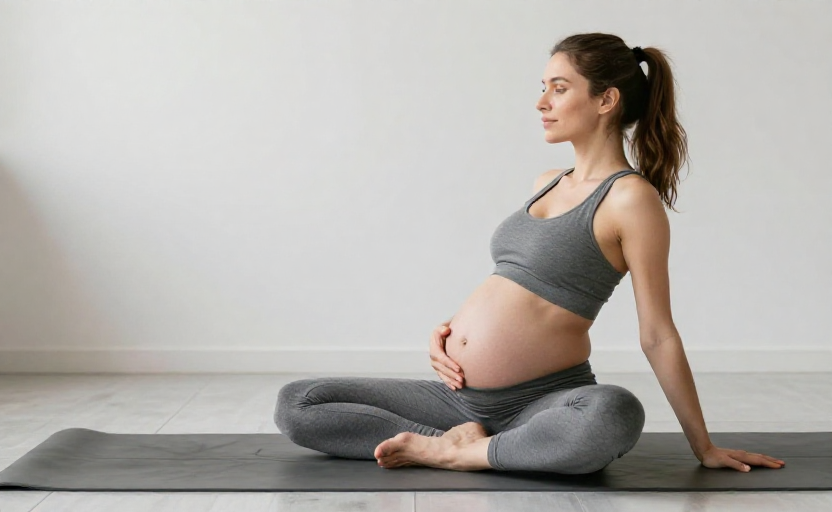
You are deep into the second trimester, ticking off the prenatal checklists, and feeling good. But there is a quiet system inside your body—the pelvic floor—that rarely gets the same attention as your growing belly. In pregnancy, this sling of muscles and connective tissue supports your bladder, uterus, and bowel. When it is strong and resilient, it helps you carry the extra weight, recover faster after birth, and avoid leaks. When it is compromised, the consequences can be surprisingly long-lasting.
Yet two very common habits—often performed with the best intentions—can silently undermine your pelvic floor during pregnancy. Let's look at each one carefully so you know exactly what to adjust.
Mistake #1: Bearing Down or Breath-Holding During Everyday Movements
You may not realize it, but every time you lift a toddler, hoist a heavy grocery bag, or even push yourself upright from a lying position, you are putting pressure on your pelvic floor. The problem is not the movement itself; it is how you move. Many pregnant women instinctively hold their breath or bear down—what movement specialists call a Valsalva maneuver—to create core stability. This increases intra-abdominal pressure dramatically and pushes that force straight down onto the pelvic floor.
Over the course of months, that repeated downward pressure can overstretch the muscles and connective tissue. That sets the stage for discomfort, heaviness, and even pelvic organ prolapse later in pregnancy or postpartum. It is the single most common mistake I see in prenatal fitness classes and even in everyday tasks at home.
Simple fix: Exhale as you exert. Whether you are standing from a squat, lifting a child, or pushing a stroller up a curb, breathe out through your mouth on the hardest part of the move. This coordinates your deep core and pelvic floor to work as a unit instead of against each other.
A physical therapist who specializes in women's health can coach you further, but for day-to-day life, the cue is simple: if you are lifting or straining, do not hold your breath. Pair exhaling with effort, and you reduce that crushing downward pressure instantly.
Mistake #2: Over-Relying on Crunch-Style Ab Workouts
The second culprit is the type of abdominal exercise you choose. Many pregnant women want to maintain a strong core to support the back and posture, so they continue doing crunches, sit-ups, or full planks well into the second trimester. On the surface, this sounds smart. In reality, it can be actively harmful.
When you perform crunches in mid-to-late pregnancy, the growing uterus creates a forward pull on the abdominal wall. The crunch motion forces the rectus abdominis muscles to shorten and bulge outward, which can worsen the separation known as diastasis recti. This is not just a cosmetic issue—a significant separation leaves the midline weak and puts more load on the pelvic floor, because it is now compensating for the missing tension in the front. The same downward pressure you produce with a crunch travels straight to the pelvic floor, and over time that strain can cause muscle fatigue, poor coordination, and increased risk of urinary incontinence.
What to Do Instead
Swap direct flexion exercises—crunches, sit-ups, jackknives—for core drills that respect the changing abdominal wall. Think of transverse abdominis engagement, which is the deepest layer of the abdominals that acts like a natural corset. Exercises like bird-dog, dead bug, heel slides, or standing core work with a resistance band all keep the abdominals long and engaged without excessive rounding of the spine. Even a modified side plank is far safer than a traditional crunch.
The key is to train the core as a pressure-management system rather than as a flexor. That shift alone can prevent the domino effect that leads to pelvic floor overload, prolapse, and incontinence later.
Why These Mistakes Matter So Much in Pregnancy
The pelvic floor has a remarkable capacity to absorb load, but pregnancy hormones—especially relaxin—make the connective tissues more pliable. That means the same force that might have been just fine before pregnancy now stretches the pelvic floor a little more each time. Add the weight of the baby and the increased blood volume, and the cumulative effect can be significant.
Many women do not realize they have hurt their pelvic floor until weeks or months postpartum, when they try to run or sneeze and leak. Or they feel a heavy pressure in the vagina that signals prolapse. By then, the muscles have already been weakened. The good news is that correcting these two mistakes during pregnancy can help preserve function and strength so recovery is faster and easier.
When to See a Specialist
If you already feel a heaviness, a bulge, or pain in the pelvic region, or if you leak urine when you cough, sneeze, or laugh, it is wise to see a pelvic floor physical therapist. They can assess your individual muscle tone, teach you proper coordination, and give you targeted exercises that no generic prenatal class will cover. Do not just assume discomfort is normal—it is common, but not inevitable.
The two mistakes detailed above are easy to correct with awareness. Exhale on exertion. Ditch the crunches. Your pelvic floor—and your postpartum self—will thank you.