
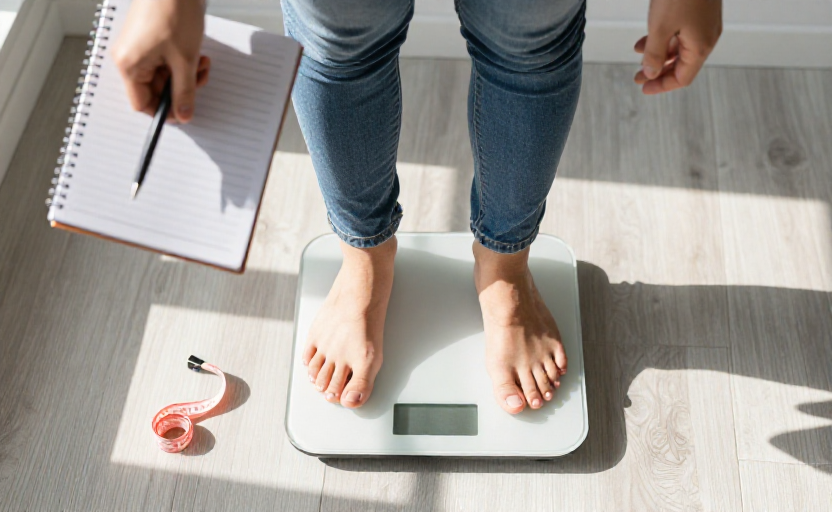
If you live with a thyroid condition, you already know how closely your weight and your thyroid function are linked. Even small shifts in hormone levels can show up as unexpected weight gain, stubborn loss, or changes in how your clothes fit. But here’s the challenge: you can’t check your thyroid levels every morning, and your scale doesn’t tell you the full story. What you need is a simple, repeatable morning routine that helps you spot trends—so you can talk to your doctor with useful data, not vague worries.
This routine is not about diagnosing or treating anything. It’s a practical way to track your own patterns, catch changes early, and feel more in control. Let’s walk through it step by step.
Why your morning data matters more than evening data
Your body’s baseline is most stable in the first hour after waking. Your thyroid hormones, metabolism, and hydration status are less influenced by food, activity, and stress than they are later in the day. That makes morning readings more consistent and therefore more useful for tracking trends over weeks and months.
Choose one consistent time—ideally right after using the bathroom and before eating or drinking anything. Stick to it every day, even on weekends. Consistency is more important than perfection.
What you’ll need
- A reliable scale – Digital, same surface (hard floor, not carpet), same time each morning.
- A simple notebook or app – Paper, Notes app, or a dedicated health tracker. No elaborate spreadsheet required.
- A measuring tape – Optional but very helpful for tracking girth changes that a scale might miss.
Step 1: Weigh yourself the same way every time
Step on the scale after you’ve emptied your bladder, before you drink water, and while wearing the same amount of clothing (or none). Write down the number. Don’t judge it. Don’t react. Just record it.
One reading doesn’t tell you much. What matters is the direction over a week or two. If you see a consistent upward trend over 7–10 days, it may signal fluid retention or a metabolic shift rather than actual fat gain—both can be related to thyroid function. If you see a consistent drop, it may mean your medication needs adjusting or your body is in a different energy balance.
Step 2: Feel your neck gently (the thyroid check)
This isn’t a medical exam, and you’re not replacing your doctor. But you can learn to notice subtle changes in the front of your neck. Using your fingertips, gently feel the area just below your Adam’s apple (or where it would be) while you swallow. Do it over a mirror if that helps. You’re looking for any new lump, swelling, tenderness, or asymmetry.
Note what you feel each morning. Over time, you’ll learn your own baseline. If you ever notice a new firmness, enlargement, or pain, make a note and mention it at your next appointment.
A tip: Don’t press hard. You’re just sensing, not probing. A few seconds is enough.
Step 3: Check one body measurement each week
Your weight can be misleading when thyroid function shifts because water weight changes a lot. Waist and neck circumference give you a second angle. Measure your waist at the narrowest point (usually just above your belly button) and your neck at its widest point, just below your larynx. Do this once a week on the same day, right after weighing.
If your waist measurement goes up while your weight stays the same, that’s a clue your body composition may be changing. If your neck feels fuller or your collar buttons feel tighter, it might relate to thyroid gland changes.
Step 4: Log your energy and temperature (surprisingly useful)
Your morning temperature can be a rough proxy for metabolic rate. People with an underactive thyroid often run a little cool in the morning; those with an overactive thyroid may feel warm or sweat overnight. Take your temperature under your tongue or under your arm right after weighing and before moving around much. Write it down alongside your weight.
Also jot down a one-word energy rating: “low,” “okay,” or “good.” This takes seconds but helps you see whether your physical symptoms align with your weight trend.
What to do with all this data
After 2–4 weeks, you’ll start to see a pattern. Share this log with your doctor at your next visit. A record that shows “my weight increased 3 lb over two weeks, my morning temp dropped half a degree, and I felt low energy every day” gives your clinician a much clearer picture than saying “I think I’m gaining weight.”
This routine helps you become an active partner in your own care. You’re not obsessing over the scale—you’re listening to your body’s signals with a method that cuts through the noise.
A final note on mindset
Tracking thyroid-related changes can feel anxiety-provoking. The purpose is not to worry more, but to worry less—by replacing vague fear with clear facts. If you notice changes, you’re not panicking; you’re documenting. And that’s exactly the right response.
If your symptoms ever feel serious—difficulty swallowing, rapid heartbeat, extreme fatigue, or significant swelling—contact your doctor directly. This routine is for daily awareness, not emergency care.