Getting a child to sleep through the night can feel like a nightly negotiation. While bedtime routines, dark rooms, and consistent schedules get most of the attention, what you offer your child to drink before bed can play a surprisingly supportive role. Many popular drinks contain hidden caffeine or added sugars that can disrupt sleep, while a few simple options can help signal the body to wind down.
Parents often wonder if a warm cup of milk or a soothing herbal tea is actually helpful or just another habit. We spoke with pediatric dietitians to cut through the myths and get clear, practical advice on what to serve—and what to avoid—when the goal is better sleep for your child.
Why the right bedtime drink matters for pediatric sleep
A child’s sleep cycle is sensitive to what they consume in the hours before bed. Drinks that contain caffeine—even small amounts found in chocolate milk, some sodas, or iced tea—can delay the onset of sleep and reduce sleep quality. Added sugars can cause blood sugar spikes that lead to restless nights and early wake-ups.
On the other hand, certain drinks provide nutrients that support the body’s natural sleep processes, such as magnesium, calcium, and tryptophan. These nutrients help produce melatonin and serotonin, the neurochemicals that regulate sleep. The key is choosing beverages that are naturally low in sugar, free of caffeine, and served at a comfortable temperature.
The best bedtime drink options for pediatric sleep
Dietitians consistently point to a handful of drinks that fit the criteria for sleep-friendly, caffeine-free, and low-sugar options. Here are the top recommendations:
Warm milk
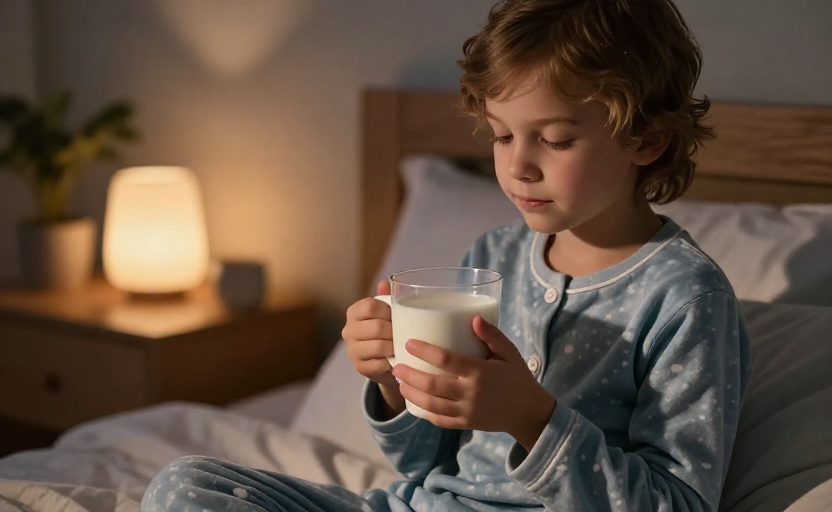
Warm milk is the classic sleep aid for a reason. It contains tryptophan, an amino acid that the body converts into serotonin and then melatonin. The calcium in milk also helps the brain use tryptophan more effectively. The warmth itself may have a comforting, ritualistic effect that signals relaxation. Plain, unsweetened dairy or unsweetened plant-based milk (like oat or soy) works best.
Chamomile tea
Chamomile is one of the few herbal teas studied specifically for sleep in children. It contains apigenin, an antioxidant that binds to certain brain receptors and promotes drowsiness. Dietitians recommend brewing a weak, caffeine-free cup of chamomile tea and serving it warm, with no added sugar. Many children enjoy the mild floral taste, especially when offered as part of a calming bedtime routine.
Tart cherry juice (diluted)
Tart cherry juice is a natural source of melatonin. Studies have shown that a small amount can improve sleep duration and quality in both children and adults. Because undiluted juice is high in natural sugar and can be tough on teeth, dietitians advise diluting one part tart cherry juice with two or three parts water. A serving of about two to four ounces (depending on age) is sufficient—no need for a full glass.
Warm water with a squeeze of lemon or honey
While not a sleep aid in itself, plain warm water can help with hydration without any sleep-disrupting ingredients. A small amount of honey (for children over age one) may soothe a scratchy throat or cough that can keep a child awake. This option is especially helpful during cold and flu season.
Drinks to avoid before bedtime
Knowing what not to serve is just as important as knowing what to offer. Dietitians flag several beverages that can interfere with a child’s ability to fall and stay asleep:
- Chocolate milk or hot cocoa: Even small amounts of caffeine from cocoa can affect sensitive children, and many store-bought mixes contain added sugars.
- Soda or fizzy drinks: Caffeinated sodas are obvious culprits, but even caffeine-free sodas often have high sugar content that can cause energy swings.
- Fruit juice (undiluted): High natural sugar concentration can lead to blood sugar fluctuations. If juice is part of a bedtime routine, keep it well-diluted and limit the portion.
- Iced tea or sweetened teas: Even light green or black tea contains caffeine. Herbal teas that are not clearly labeled caffeine-free should be avoided.
- Sports or electrolyte drinks: These are designed for rehydration after activity and often include both sugar and caffeine.
A good rule of thumb: if you wouldn’t give it to a child an hour before a nap, avoid it before bedtime.
How to introduce a bedtime drink without creating a crutch
Parents sometimes worry that a bedtime drink will become a dependency—meaning the child cannot fall asleep without it. Dietitians suggest using the drink as part of a broader wind-down routine rather than as a standalone solution. Offer the drink 30 to 45 minutes before lights-out, paired with calm activities like reading, soft music, or gentle conversation. Keep the serving small (four to six ounces) so it doesn’t create a need for a middle-of-the-night bathroom trip.
If a child is already used to a sugary or caffeinated drink at bedtime, transition gradually. Mix the new, healthier option with the old one in increasing proportions over a week or two. Most children adapt quickly, especially when the new drink is presented as a special “nighttime treat.”
Age-specific considerations
The right drink also depends on the child’s age. For toddlers and preschoolers, warm milk or a very diluted chamomile tea is safest. School-age children may enjoy tart cherry juice or a mild herbal blend. For teenagers, the same principles apply, but be aware that they may be more likely to reach for caffeinated drinks or energy beverages during the day, which can carry over into night-time sleep disruption.
For children under age one, water or breast milk/formula before bed is sufficient. Honey should never be given to infants due to the risk of botulism. Always check with your pediatrician before introducing any new drink, especially if your child has health conditions or takes medication.
The role of routine and environment
A bedtime drink works best when it is part of a consistent, calming routine. The drink itself is not a magic bullet—it supports the body’s natural sleep cues, but it cannot override a chaotic or overstimulating bedtime environment. Keep screens off for at least an hour before bed, dim the lights, and maintain a comfortable room temperature. The drink becomes one signal among many that tells the child’s brain: time to rest.
If your child continues to have trouble falling asleep or staying asleep despite these changes, talk with your pediatrician or a pediatric sleep specialist. Occasional bedtime struggles are normal, but persistent issues may require further evaluation.
When chosen thoughtfully, a simple nighttime beverage can be a soothing, healthy addition to your child’s bedtime routine—one that respects both their biological needs and your family’s rhythm.