
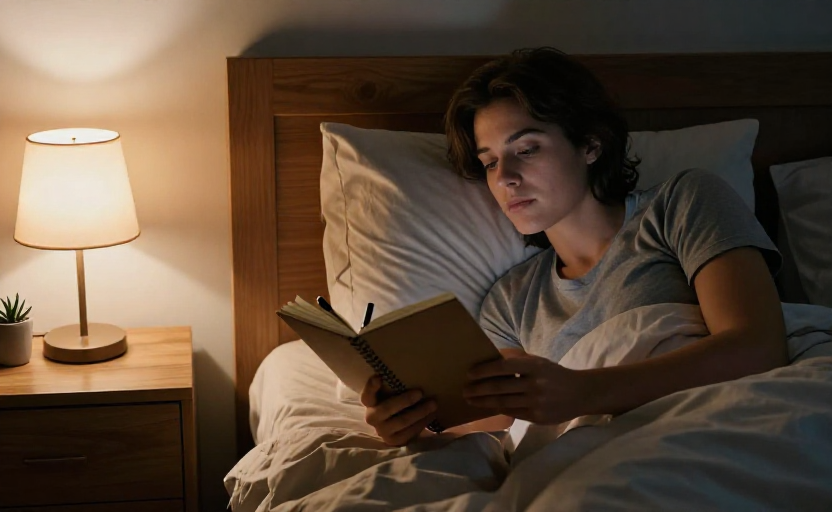
You know the feeling: the lights are off, the house is quiet, and your brain decides it’s the perfect time to replay every awkward conversation from the past decade, or to construct elaborate worry-scenarios about tomorrow. Nighttime anxiety is a thief—it steals the rest you need and leaves you staring at the ceiling, heart pounding, mind racing. As a health editor who has spoken with sleep specialists, I can tell you that you’re not broken, and this is a common problem with practical solutions.
Here’s what sleep medicine experts actually recommend when worry keeps you awake. These are not magical cures; they are evidence-based strategies to calm your nervous system and help you drift off.
Why Does Anxiety Spike at Night?
During the day, distractions keep your mind busy. At night, there are no emails, no conversations, no to-do lists. Your brain, freed from external demands, turns inward. Add in the natural dip in cortisol (the stress hormone) and rise in melatonin, and your body is primed for vulnerability. The result? Your brain’s alarm system stays on, mistaking a quiet bedroom for a threat.
A sleep specialist will tell you this is not a character flaw. It is biology. And biology responds well to routine and environmental tweaks.
The 15-Minute Wind-Down Rule
One of the simplest, most effective recommendations from sleep specialists is the scheduled worry period. Set aside 15 minutes earlier in the evening—not in bed—to actively worry. Get a notebook and write down everything that is bothering you. Do not try to solve it all; just dump it onto paper.
When you later lie down and a worry pops up, tell yourself: “I already wrote that down. I will deal with it tomorrow.” This trains your brain to stop treating the bed as a problem-solving arena.
Create a Sensory Safety Cue
Anxiety often lives in the body before the mind recognizes it. A racing heart, shallow breathing, tight shoulders—these physical sensations can keep you awake. Sleep specialists recommend creating a sensory safety cue that signals rest to your nervous system.
- Weighted blanket: The deep pressure stimulation can lower cortisol and increase serotonin. Aim for a blanket that is about 10% of your body weight.
- Pink noise or brown noise: Unlike white noise, pink noise has a lower frequency that mimics natural sounds like rainfall. It can help dampen the brain’s hypervigilance.
- Cool room temperature: A drop in core body temperature helps trigger sleep onset. Keep your bedroom between 65 and 68°F (18–20°C).
Do Not Fight the Awake
Here is the counterintuitive advice that surprised me: if you are not asleep after 20 minutes, get out of bed. Stay in dim light, go to a comfy chair, read a boring book (physical pages, not a bright screen). Do not scroll, do not check work email. The goal is to break the association between your bed and the struggle of trying to fall asleep.
“Staying in bed awake creates a conditioned arousal—your brain learns that bed is a place for worry, not rest.” — American Academy of Sleep Medicine
Breathing Techniques That Actually Work
While “just breathe” can sound dismissive, specific patterns have solid research behind them. One I use myself and recommend is box breathing:
- Inhale through your nose for 4 seconds.
- Hold your breath for 4 seconds.
- Exhale through your mouth for 4 seconds.
- Hold your lungs empty for 4 seconds.
- Repeat for 2–3 minutes.
This activates the parasympathetic nervous system—your body’s brake pedal. You do not need to clear your mind. Just count.
Cut the Late-Night Stimulants (and the Alcohol)
This might seem obvious, but many people overlook hidden caffeine sources. Chocolate, certain teas (green tea has caffeine, rooibos does not), and even some decaf coffees contain small amounts that add up. Alcohol is especially tricky: while it may help you fall asleep faster, it fragments sleep later in the night, often triggering anxiety dreams or night sweats.
A sleep specialist would advise a caffeine cutoff at least 6 to 8 hours before bedtime and limiting alcohol to one serving, consumed at least 3 hours before sleep.
When to Talk to a Professional
If nighttime anxiety happens more than three nights per week for a month, or if it is affecting your daytime functioning, it is worth discussing with a doctor or a therapist. Cognitive behavioral therapy for insomnia (CBT-I) is a first-line treatment that works long-term, often without medication. There are also online programs and specialized sleep psychologists.
The goal is not to eliminate all worry—that is unrealistic. The goal is to contain it so it does not steal your rest. Start with one small change tonight. Your brain will slowly learn that the dark is safe.