Introducing your baby to solid foods is a journey filled with excitement, a little mess, and plenty of questions. It’s not just about what foods to offer, but how to offer them—the right textures and portion sizes evolve as quickly as your little one grows. This guide serves as a simple, age-by-age checklist to help you navigate this important stage with confidence, focusing on safety, nutrition, and the joy of discovery.
Getting Started: Key Principles for Every Age
Before diving into the specifics, a few foundational ideas apply from the first bite onward. Always consult your pediatrician before starting solids, especially if there's a family history of allergies. Offer new foods one at a time, waiting a few days before introducing another, to watch for any reactions. And remember, at this stage, breast milk or formula is still the primary source of nutrition; solid food is for practice, taste, and skill development.
Let your baby's cues guide you. They will show you when they're interested, full, or frustrated. Mealtime is a learning experience for both of you.
6 to 8 Months: The First Explorations
This stage is all about introducing the idea of eating. Your baby is likely showing signs of readiness: good head and neck control, ability to sit with support, and interest in your food. The goal is sensory exploration.
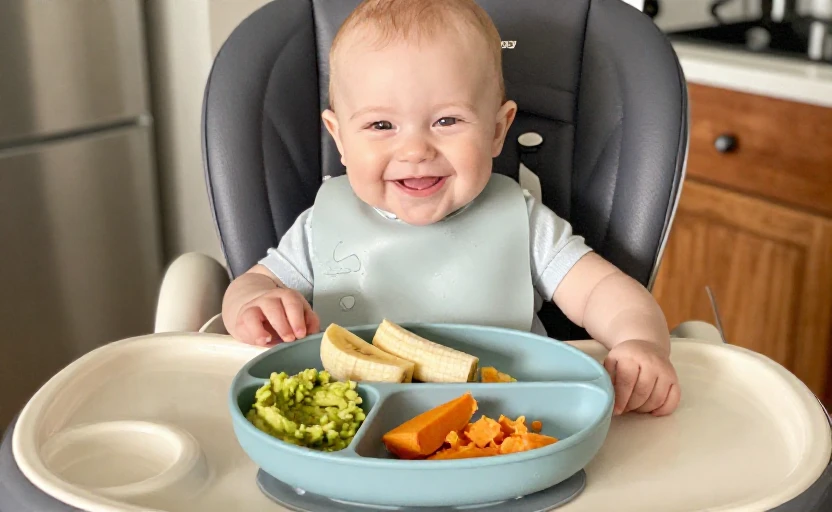
Foods to Introduce: Start with single-ingredient, iron-rich purees. Good first foods include iron-fortified single-grain cereal (mixed with breast milk or formula), smooth purees of avocado, sweet potato, pear, banana, or peas.
Texture: Extremely smooth, runny purees. The consistency should be similar to thick yogurt, with no lumps. You can gradually thicken it as your baby gets the hang of swallowing.
Portion Size: Start with just 1 to 2 teaspoons once a day. This isn't a meal; it's a taste. Slowly work up to a few tablespoons, twice a day, as your baby shows interest.
How to Feed: Use a soft-tipped spoon. Let your baby lean forward and take the food from the spoon. Never force it. You can also offer large, mashable sticks of soft-cooked vegetables (like a big floret of steamed broccoli) for them to gum and explore—this is often called baby-led weaning, but always ensure pieces are soft enough to mash with gentle pressure and large enough that they can't choke.
8 to 10 Months: Building Skills and Variety
Your baby is now developing a pincer grasp (using thumb and forefinger) and can move food around in their mouth. Meals become more interactive and textured.
Foods to Introduce: Expand the menu! You can now combine flavors in thicker purees. Introduce soft, cooked proteins like mashed beans, lentils, flaked fish, scrambled egg, or very finely minced chicken. Offer small pieces of soft fruits (ripe banana, peach, avocado) and well-cooked vegetables.
Texture: Move from smooth purees to mashed foods with soft, small lumps. Think mashed banana with bits, or finely chopped soft-cooked carrots mixed into a thicker puree. This helps them learn to chew.
Portion Size: About 2 to 4 tablespoons per meal, offered 2 to 3 times a day. Let appetite be your guide; some days they'll eat more, some days less.
How to Feed: Encourage self-feeding with safe, graspable finger foods. Offer a spoon to hold while you feed with another. Always supervise closely. Avoid hard, round, or sticky foods like whole nuts, grapes, popcorn, and spoonfuls of peanut butter.
10 to 12 Months: Transitioning to Family Meals
This is a period of rapid skill development. Your baby may start using a spoon (messily!) and chewing more effectively. They're ready to eat more like the rest of the family.
Foods to Introduce: Nearly all family foods, modified for safety. Offer small, soft-bite sized pieces of whatever you're eating: pasta, soft-cooked meatballs, shredded cheese, small pieces of pancake, steamed vegetable pieces. Continue to introduce a wide variety of flavors.
Texture: Soft, chopped, or minced foods. They should be easily squished between your fingers. You can also offer well-cooked, soft grains like rice or quinoa.
Portion Size: Meals can be roughly ¼ to ½ of an adult portion, spread across 3 meals and 1-2 snacks daily. A typical meal might be 2-3 tablespoons of protein, 2-3 tablespoons of a vegetable, and a similar amount of a grain.
How to Feed: Eat together as a family whenever possible. Offer a mix of finger foods and pre-loaded spoons. Let them practice drinking water from an open cup or straw cup with meals.
12 Months and Beyond: Toddlerhood
Congratulations, you have a toddler! At this age, growth slows and appetites can become unpredictable. The focus shifts to establishing healthy eating habits and routines.
Foods to Introduce: Your child can now have honey and whole cow's milk (as a drink, after consulting your pediatrician). Continue offering the wide variety of foods your family eats.
Texture: Mostly table foods, cut into small, bite-sized pieces. They can handle more complex textures but still need food cut safely to prevent choking.
Portion Size: A good rule of thumb is 1 tablespoon per year of age for each food group at a meal. So, a 1-year-old might have 1 tbsp of chicken, 1 tbsp of peas, and 1 tbsp of rice. This is just a starting point—follow their hunger cues.
How to Feed: Maintain a structured schedule of 3 meals and 2-3 snacks to prevent constant grazing. Your job is to offer healthy options at scheduled times; their job is to decide how much to eat. Don't pressure or force-feed; it's normal for toddlers to be picky.
Foods to Avoid for Safety
Regardless of age, some foods pose a choking risk and should be avoided until at least age 4, or modified significantly:
- Whole nuts and seeds
- Whole grapes, cherry tomatoes, or berries (always cut into quarters)
- Hot dogs or meat sticks (cut lengthwise and then into small pieces)
- Hard, raw vegetables like carrot sticks (cook until soft or grate finely)
- Popcorn, chips, pretzels
- Sticky foods like large globs of peanut butter or marshmallows (spread nut butter thinly)
- Honey (avoid until after 1 year due to risk of infant botulism)
Navigating your baby's nutritional journey is a process of gentle guidance and observation. This checklist is a framework, but your baby is the ultimate guide. Celebrate the milestones, embrace the mess, and know that by offering a variety of safe, age-appropriate foods, you're laying the foundation for a lifetime of healthy eating habits.