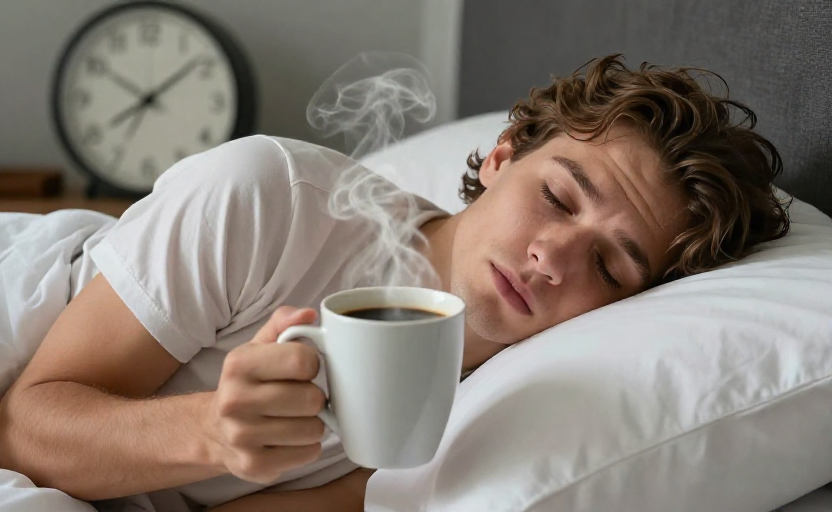
For many of us, the morning cup of coffee is a sacred ritual. It’s the warm signal that the day has started, a small moment of calm before the chaos. But if you’ve been lying awake at 2 a.m. with a racing mind, that comforting mug might be the culprit. What feels like a harmless morning habit can actually be a primary driver of your nighttime anxiety.
The problem isn’t just caffeine itself. It’s about timing, dosage, and your individual stress chemistry. Let’s break down exactly how that early morning java can sabotage your evening peace.
The Cortisol Connection You Can't Ignore
Your body runs on a natural 24-hour clock called the circadian rhythm. One of its key players is cortisol, often called the “stress hormone,” but it’s actually essential for waking you up. Your cortisol levels peak naturally between 8 a.m. and 9 a.m., giving you an energy boost to greet the day.
Here’s where coffee becomes a problem: Caffeine is a powerful stimulant that artificially spikes cortisol. When you drink coffee during your body’s natural cortisol peak, you’re essentially stacking a chemical stimulant on top of a biological one. This can create an exaggerated stress response that doesn’t just fade away by bedtime. Studies show that even moderate morning caffeine can keep your cortisol levels elevated for hours, disrupting the natural decline needed for restful sleep.
The takeaway: Drinking coffee when your cortisol is already high can throw off your stress-regulating system for the rest of the day, directly feeding evening anxiety.
The Delayed Anxiety Effect
You don’t usually feel anxious right after your morning coffee. You feel alert, focused, maybe even a little optimistic. The trouble is caffeine’s half-life—the time it takes for your body to eliminate half of it—ranges from 3 to 7 hours. For some people, it’s even longer. That means a 200 mg cup of coffee (about a 12-ounce brew) at 8 a.m. still has significant effects at 3 p.m.
By 10 p.m., you may still have enough caffeine in your system to keep your brain from entering the deeper stages of sleep. You might fall asleep fine, but your brain stays in a lighter, hyper-vigilant state. This is when you wake up at 3 a.m. with your heart pounding, suddenly replaying every awkward conversation from the last five years. That’s not random—it’s the residual stimulant effect meeting your natural late-night dip in anxiety-regulating neurotransmitters.
Are You a Slow Metabolizer?
Genetics play a huge role in how you process caffeine. Some people have a genetic variant that makes them “slow metabolizers.” For them, caffeine lingers in the bloodstream much longer, amplifying its anxiety-triggering effects. If you’ve always wondered why your friend can drink espresso after dinner and sleep like a baby, while you feel wired from a single morning latte, this could be why.
- Fast metabolizers: Clear caffeine quickly; less impact on nighttime anxiety.
- Slow metabolizers: Caffeine stays active 8–12 hours; much higher risk of sleep disruption and evening anxiety.
Unfortunately, there’s no at-home test for this, but a simple experiment can clue you in: Try going caffeine-free for a full week. If your nighttime anxiety dramatically improves, you’re likely a slow metabolizer who needs to adjust their intake.
How to Keep Your Morning Coffee Without the Night Anxiety
You don’t have to give up coffee entirely. But you may need to rethink the process. Here’s a practical approach that helps calm the anxiety cycle.
1. Delay Your First Cup by 90 Minutes
This is the single most effective change you can make. Instead of drinking coffee the moment your eyes open, wait 60 to 90 minutes. This allows your natural cortisol peak to start your day without interference. When you do drink coffee, your body processes it more efficiently, and the stimulant effects are less likely to overlap with your stress hormones.
2. Stick to One Cup (or Less)
If you’re prone to anxiety, multiple cups of coffee compound the problem. Aim for a single 6-to-8-ounce cup of black coffee or a latte. More than that, and you’re flooding your system with a stimulant that will carry into the afternoon and evening.
3. Cut Off by Noon
Even if you only drink one cup, experts generally recommend a caffeine curfew. For most people with anxiety sensitivities, that means no coffee after 11 a.m. or 12 p.m. This gives your body a full 12-hour window to metabolize the caffeine before bedtime, allowing your stress response to naturally subside.
4. Consider a Half-Caff or Low-Caffeine Option
If the ritual is what you crave—the warmth, the smell, the morning routine—switch to half-caff. You still get the comfort and a small amount of caffeine, but the stimulant load on your adrenals is dramatically reduced.
When Morning Coffee is a Mask for Deeper Anxiety
Sometimes the morning coffee habit is actually a coping mechanism. You might be using caffeine to push through a low-level anxiety that’s already present. This becomes a vicious cycle: you feel anxious, you drink coffee to “power through,” the caffeine spikes your cortisol further, and by nightfall you’re too wired to relax.
If you notice that your morning coffee feels necessary just to feel “normal,” or if you experience withdrawal headaches, irritability, or fatigue when you skip it, this is a sign of dependence. Reducing your intake gradually—or switching to herbal alternatives like chicory root or rooibos—can help reset your baseline stress levels.
Ultimately, the goal isn’t to make coffee the enemy. It’s to understand that your morning habit and your nighttime peace are directly linked. By shifting when and how you consume caffeine, you can keep the ritual you love while reclaiming the calm you deserve at night.