
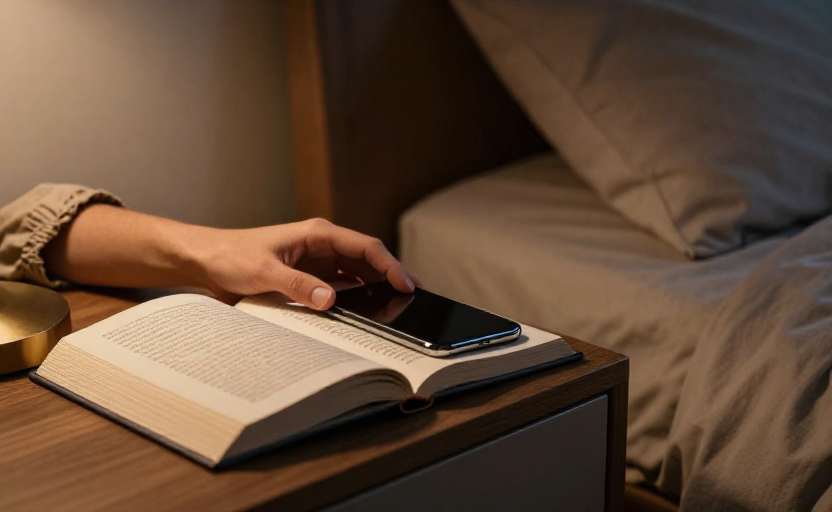
You’ve dimmed the lights, settled into bed, and opened your phone for a final scroll. It feels like a harmless way to unwind, a quiet transition from the day’s demands to rest. But this common bedtime ritual is quietly sabotaging your body’s natural ability to find calm and fall asleep. The glow of your screen isn’t just illuminating memes or news; it’s sending a powerful, biologically confusing signal to your brain that directly opposes sleep.
The good news is that understanding this simple mechanism opens the door to a far more effective, science-backed alternative. It’s not about adding another task to your evening, but about a gentle, intentional shift in one key habit.
How Screen Light Disrupts Your Sleep Chemistry
Our sleep-wake cycle is governed by a master clock in the brain, heavily influenced by light. As evening approaches and natural light fades, your body begins producing melatonin, a hormone that promotes drowsiness and lowers body temperature to prepare for sleep. Think of melatonin as the chemical signal that opens the gate to restful sleep.
The problem with smartphones, tablets, laptops, and TVs is their emission of blue-wavelength light. This type of light is especially potent at suppressing melatonin production. When you look at a screen in the hour or two before bed, you’re essentially telling your brain’s internal clock that it’s still daytime. The melatonin surge you need is delayed or diminished, making it harder to feel sleepy, harder to fall asleep, and often resulting in a less restorative night.
Your screen’s blue light doesn’t just keep your mind engaged—it actively blocks the chemical signal for sleep.
Beyond melatonin, this artificial light exposure can also delay the drop in your core body temperature, another critical physical cue for sleep onset. The result is a state of physiological alertness when you want to be winding down. You might feel physically tired, but your brain is receiving conflicting instructions.
The Ripple Effects on Sleep Quality
The impact goes beyond just taking longer to drift off. Even if you do fall asleep after scrolling, the quality of that sleep can suffer. Research suggests that pre-bed screen use can reduce the amount of time spent in rapid eye movement (REM) sleep, the stage crucial for memory consolidation, learning, and emotional processing.
Furthermore, the content itself matters. Scrolling through work emails, engaging in stressful social media debates, or watching an intense thriller activates the mind and can spike cortisol (a stress hormone) and adrenaline. This puts your nervous system into a state of fight-or-flight, the polar opposite of the rest-and-digest state required for sleep. You’re layering psychological stimulation on top of the biological disruption caused by the light.
A Science-Backed Alternative: The Digital Sunset
The alternative isn’t necessarily to sit in a dark room with your thoughts for an hour. It’s about creating a buffer zone—a “digital sunset”—between your screen-based life and your sleep. The goal is to allow your natural melatonin production to rise unimpeded and to let your nervous system transition to calm.
Aim to power down all bright screens at least 60 minutes before your target bedtime. This includes phones, tablets, computers, and televisions. If this feels impossible, start with a more manageable 30 minutes and build from there. The key is consistency.
What to Do During Your Screen-Free Hour
This newfound time is an opportunity for genuinely calming activities that signal safety and rest to your brain and body.
- Opt for Dim, Warm Light: Use soft, warm-toned lamps instead of overhead lights. Consider a dimmable salt lamp or a bulb with an amber hue. This type of light has a much weaker effect on melatonin than blue light.
- Engage in Low-Stimulation Activities: Try reading a physical book or magazine, listening to calming music or a sleep story podcast, practicing gentle stretching or restorative yoga poses, or journaling (focusing on gratitude or simple reflections, not stressful problem-solving).
- Embrace Simple Rituals: Prepare a cup of caffeine-free herbal tea, like chamomile or lavender. Practice a few minutes of deep, slow breathing. Tidy up your sleeping space. These small, tactile acts build a powerful routine.
If you must use a device, enable the night shift or blue light filter feature at maximum strength several hours before bed. While not as effective as avoiding screens altogether, it can reduce the impact. For essential reading, an e-ink reader (without a lit screen or with a warm front light) is a better option than a tablet.
Changing a deeply ingrained habit takes patience. You might feel a bit restless or bored the first few nights without the digital distraction. That’s normal. Observe this feeling without judgment, and trust that you are retraining your nervous system. Over a week or two, you’ll likely notice it becomes easier to fall asleep, and you may wake up feeling more refreshed. By replacing the habit that sabotages calm with one that cultivates it, you’re not just improving your sleep—you’re honoring your need for genuine, uninterrupted rest.