When we talk about feeling good, the conversation often starts in the mind—with our thoughts, our stress levels, our mood. But a growing body of science points us somewhere else first: to our plates. Chronic, low-grade inflammation is increasingly understood as a common thread linking physical discomfort with mental fog and emotional unease. The foods we choose can either fan these inflammatory flames or help cool them, creating a foundation for a clearer, calmer mind.
This isn't about a restrictive diet or chasing a magic bullet. It's about understanding how certain everyday foods contain powerful, natural compounds that help regulate the body's inflammatory response. By making them regular guests at your table, you're not just feeding your body; you're supporting the very environment in which your brain and mood can thrive.
How does food influence inflammation and mood?
Inflammation is a natural, protective response from your immune system to injury or infection. Think of the swelling and redness around a cut—that's acute inflammation at work, and it's essential for healing. The problem arises when this response doesn't turn off, becoming a chronic, low-level simmer throughout the body. This state can be influenced by many factors, including stress, lack of sleep, and, significantly, diet.
Certain foods, particularly those high in refined sugars, unhealthy fats, and processed ingredients, can promote the release of inflammatory messengers called cytokines. Research suggests these same inflammatory compounds can cross the blood-brain barrier and influence brain function. They may interfere with the production of key neurotransmitters like serotonin and dopamine, which regulate mood, and can even affect the brain's neuroplasticity—its ability to adapt and form new connections.
The gut and brain are in constant communication via the gut-brain axis. An inflamed gut can send distress signals to the brain, contributing to feelings of anxiety or low mood.
Conversely, an anti-inflammatory diet rich in antioxidants, healthy fats, and phytonutrients helps quiet this systemic chatter. It supports a healthier gut microbiome, which itself produces many of the chemicals your brain needs to function optimally. The result is a more resilient physiological state, one that can better buffer against stress and support emotional balance.
Five foundational food choices
Building an anti-inflammatory eating pattern doesn't require exotic ingredients. Some of the most potent choices are wonderfully accessible. Here are five to focus on.
Fatty fish
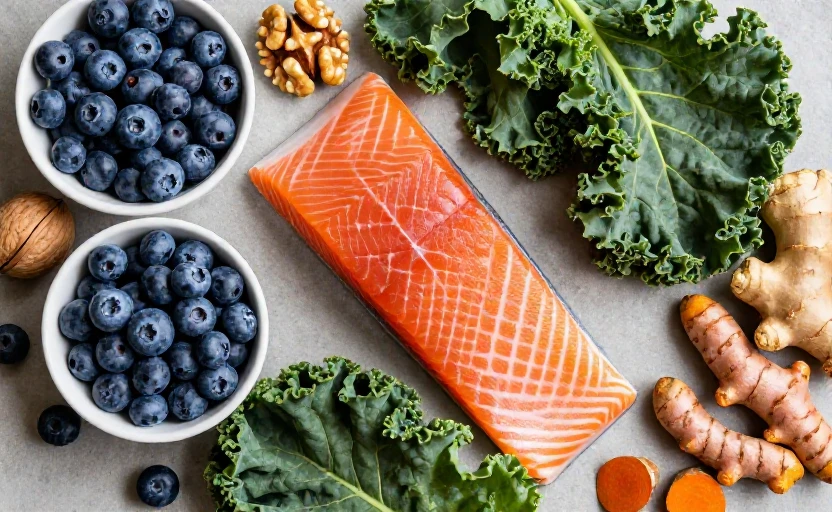
Salmon, mackerel, sardines, and anchovies are premier sources of omega-3 fatty acids, specifically EPA and DHA. These fats are incorporated directly into cell membranes in the brain, improving cell communication and fluidity. More importantly, the body uses EPA and DHA to produce specialized pro-resolving mediators—molecules that actively help resolve inflammation rather than just suppressing it.
Aim to include a serving of these fatty fish at least twice a week. For those who don't eat fish, algae-based supplements are a direct source of these crucial omega-3s.
Leafy greens and cruciferous vegetables
Spinach, kale, Swiss chard, broccoli, and Brussels sprouts are packed with vitamins (like folate and vitamin K), minerals, and a vast array of antioxidants. They are particularly rich in compounds like sulforaphane (found in broccoli) and quercetin, which have been shown to inhibit inflammatory pathways at a cellular level.
These vegetables also provide fiber, which feeds beneficial gut bacteria. A thriving gut microbiome is a cornerstone of managing systemic inflammation, as these bacteria produce short-chain fatty acids that have anti-inflammatory effects throughout the body.
Berries
Blueberries, strawberries, raspberries, and blackberries get their vibrant colors from anthocyanins, a type of flavonoid with potent antioxidant and anti-inflammatory properties. Studies have linked berry consumption to improvements in cognitive function and a slower rate of cognitive decline, likely due to their ability to reduce oxidative stress and inflammation in neural tissues.
They're a perfect sweet addition to oatmeal, yogurt, or salads, or simply enjoyed by the handful as a snack.
Nuts and seeds
Walnuts, almonds, flaxseeds, and chia seeds are nutritional powerhouses. Walnuts are unique among nuts for their high content of alpha-linolenic acid (ALA), a plant-based omega-3. All nuts and seeds provide a mix of healthy fats, fiber, and vitamin E, an antioxidant that protects cells from inflammatory damage.
A small handful (about a quarter-cup) per day is a great goal. Try sprinkling ground flax or chia seeds on cereal or blending them into smoothies for an easy boost.
Turmeric and ginger
These aromatic roots are culinary treasures for inflammation. Turmeric contains curcumin, a compound with such well-documented anti-inflammatory effects that it's compared favorably to some pharmaceutical agents in research settings. Ginger contains gingerol, which has similar properties.
Curcumin in turmeric is poorly absorbed on its own. Pair it with black pepper, which contains piperine, to increase bioavailability by up to 2,000%.
Incorporate them generously into curries, soups, and stir-fries. Fresh ginger makes a wonderful tea, and turmeric can be added to golden milk lattes or scrambled eggs.
Putting it into practice
Shifting your diet is most sustainable when approached as an addition, not a subtraction. Start by asking, "What can I add in today?" Could you add a handful of spinach to your morning smoothie? Sprinkle walnuts on your lunch salad? Have salmon for dinner on Tuesday?
Focus on building meals around a foundation of plants—vegetables, fruits, legumes—and incorporating these anti-inflammatory stars. Hydration is also key, as water is essential for every cellular process, including those that manage inflammation. Limit processed foods, sugary drinks, and refined carbohydrates, which are common triggers for an inflammatory response.
Remember, consistency over perfection is the goal. Each meal is an opportunity to nourish your body and mind, building a little more resilience with every bite.