
The flutter in your stomach before a big meeting. The cramp that hits when you’re worried. That gnawing sensation that won’t ease, no matter how many times you check your to-do list. If you’ve ever felt your anxiety land squarely in your gut, you’re not imagining it—and you’re far from alone. The brain and the gut are wired together in a constant, two-way conversation, which means that mental stress can literally alter digestion.
But here’s the part that doesn’t get enough attention: the reverse is also true. Calming the mind can calm the gut. And the most accessible, drug-free way to do that is with targeted mindfulness practices. These aren’t vague “just breathe” suggestions. The following expert-backed techniques are specific, grounded in research, and designed to interrupt the cycle of gut-related anxiety at its physiological roots.
Why the Gut Feels Anxiety So Directly
To understand why mindfulness works for gut anxiety, you have to meet the vagus nerve. This long, wandering nerve runs from your brainstem down to your abdomen, connecting your brain to your digestive organs. It’s the main highway of the gut–brain axis. When you’re anxious, your sympathetic nervous system (fight-or-flight) sends signals that slow digestion, reduce blood flow to the gut, and increase sensitivity to pain and bloating.
Mindfulness practices—especially those that involve slow, diaphragmatic breathing—activate the parasympathetic nervous system (rest-and-digest). This directly signals the vagus nerve to relax the gut muscles, reduce inflammation, and normalize motility. Over time, consistent practice can retrain your nervous system to respond more calmly to triggers.
Diaphragmatic Breathing: The Quick Reset
This is the single most portable tool in the mindfulness kit. But it’s not just “take a deep breath.” The key is to breathe from your diaphragm, not your chest. When you breathe shallowly into your chest, you keep the sympathetic nervous system engaged. When you expand your belly on the inhale, you massage the vagus nerve and trigger a relaxation response.
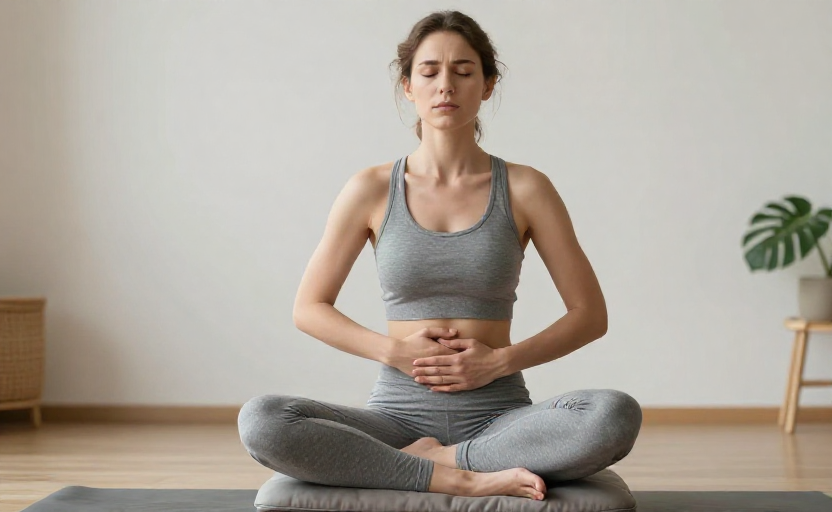
Try this: Sit upright or lie on your back. Place one hand on your chest and one on your belly. Inhale slowly through your nose for a count of four, letting your belly rise like a balloon. Exhale gently through your mouth for a count of six. Do this for two minutes. If you feel a wave of calm or even a small gurgle in your stomach, that’s the signal—your gut is responding.
“When patients with IBS use diaphragmatic breathing daily for even two weeks, many report a noticeable drop in bloating and urgency during high-stress moments.” — Gastroenterology nursing research summary
Body Scanning to Locate the Sensation
Gut anxiety often feels like a vague, blurry discomfort. Body scanning turns that blur into something you can observe without panic. The idea is to move your attention slowly from your toes to your head—or directly to your abdomen—and simply notice what’s there: pressure, warmth, tightness, emptiness. You aren’t trying to change the sensation. You’re learning to witness it.
This practice reduces the “alarm” component of anxiety. When you mindfully observe a cramp or a flutter instead of bracing against it, your brain sends fewer distress signals to the gut. Over several sessions, the intensity of the sensation often fades because the feedback loop of fear is broken.
How to do it: Lie down. Close your eyes. Take three slow breaths. Then, bring your awareness to your stomach. Imagine your breath moving in and out of your belly. Notice any areas of tension or movement. Stay here for three to five minutes. If your mind wanders, just bring it back to the belly without judgment.
Mindful Eating for Gut Sensitivity
For people whose anxiety spikes around meals or after eating, mindful eating is a direct intervention. When you eat while distracted or stressed, your digestive system doesn’t get the full vagal signal it needs. Saliva and stomach acid production drop, peristalsis is less coordinated, and you’re more likely to experience gas, bloating, or reflux.
The practice: At your next meal, put your phone away and set a timer for ten minutes. Take the first bite and put your fork down. Chew slowly, noticing the texture, temperature, and taste. Breathe between bites. This is not about eating less—it’s about sending a clear “safe” signal to your gut so it can do its job properly.
- Choose one meal a day to eat without screens or reading material.
- Take at least 20 chews per bite.
- Pause for one full breath before each next bite.
Gastroenterologists often recommend this approach for people with functional dyspepsia or IBS because it reduces post-meal pain and nausea without medication.
Loving-Kindness Meditation for Gut-Related Shame
Anxiety about digestion often carries a layer of embarrassment—the worry about noises, urgency, or odor. This shame feeds the anxiety cycle. Loving-kindness meditation (also called metta meditation) is a mindfulness practice that directly addresses self-criticism by directing phrases of goodwill toward yourself and others.
Practice: Sit quietly and repeat silently: “May I be safe. May I be healthy. May I be free from discomfort.” After a few minutes, extend those wishes to others. This may sound simple, but research shows it reduces activity in the amygdala (the brain’s fear center) and increases vagal tone. For gut anxiety, it helps you stop fighting the sensations and start accepting them with kindness, which paradoxically makes them less intense.
When to Use Each Practice
Different situations call for different tools. If you feel a wave of panic before a meeting, use diaphragmatic breathing. If you notice your stomach tightening during a difficult conversation, try a quick body scan. If you are about to eat and feel nauseous, practice mindful eating. If you wake up already worrying about your digestion, start your day with five minutes of loving-kindness meditation.
None of these practices require a special app, a studio, or a cushion. They cost nothing and have no side effects. The only requirement is a few minutes of your attention and a willingness to experiment.