Keeping your baby’s bottles and pacifiers clean is one of those quiet, essential rhythms of new parenthood. It’s not about creating a sterile bubble, but about reducing the risk of germs that a newborn’s still-developing immune system isn’t ready to handle. The good news is that with a few simple methods and consistent habits, you can create a safe, clean routine that feels manageable, not overwhelming.
This guide walks you through the safest, most effective ways to sterilize feeding equipment, from the first weeks home to when your baby starts exploring the world with their hands and mouth.
Why is sterilizing so important for newborns?
For the first few months, a baby’s immune system is still building its defenses. While you don’t need to sterilize every toy or surface they might touch, items that go directly into their mouth—like bottle nipples, pacifiers, and breast pump parts—are a direct pathway for bacteria. Harmful germs, including those that can cause thrush, diarrhea, or vomiting, can linger in milk residue. Sterilizing destroys these microorganisms, providing a crucial layer of protection during a vulnerable period.
Most health organizations recommend sterilizing all feeding equipment at least once daily for infants under three months, those born prematurely, or those with a compromised immune system.
After each use, thorough washing with hot, soapy water is essential. Sterilization is the extra step that follows, ensuring what looks clean is also microbially safe.
Your sterilization toolkit: choosing a method
You have several reliable options, each with its own pros. The best choice depends on your lifestyle, budget, and what you find easiest to maintain.
1. The electric steam sterilizer
These countertop appliances are a popular choice for their speed and consistency. They use steam to kill bacteria, usually in a cycle of 8-12 minutes. Many can hold an entire day’s worth of bottles and parts at once, and they keep items sterile inside for several hours if the lid remains closed.
Best for: Parents who bottle-feed frequently and want a fast, “set-it-and-forget-it” routine.
2. Microwave steam sterilizing
Microwave steam bags or containers are a compact and affordable alternative. You add a little water to the dedicated bag or unit, load the items, and microwave for the time specified (typically 3-5 minutes). They are highly effective but usually only hold a few bottles at a time.
Important: Always follow the manufacturer’s instructions precisely, and ensure any item you place inside is microwave-safe. Never use ordinary plastic bags.
3. Boiling in a pot
The traditional stovetop method is effective, inexpensive, and requires no special equipment beyond a large pot with a lid. Submerge items completely in a rolling boil for at least 5 minutes. Use tongs dedicated to this purpose to remove them.
A note of caution: Frequent boiling can cause silicone nipples and pacifiers to degrade faster, becoming sticky or cloudy. Check them regularly for signs of wear and replace them promptly.
4. Cold-water sterilizing solution
This method uses a non-toxic, diluted chemical solution (typically based on chlorine or hydrogen peroxide) in a large container with a lid. Items must be fully submerged for the recommended time, usually 30 minutes or more. Once removed and rinsed with cooled, boiled water, they are safe to use.
It’s a useful option for items that can’t withstand heat, like some breast pump membranes, or for travel when electricity isn’t available. Always prepare the solution fresh daily and ensure the container has a tightly fitting lid.
A step-by-step routine: wash, then sterilize
Sterilization only works on clean surfaces. Milk fat and residue can shield bacteria from the sterilizing process. Follow this two-step routine:
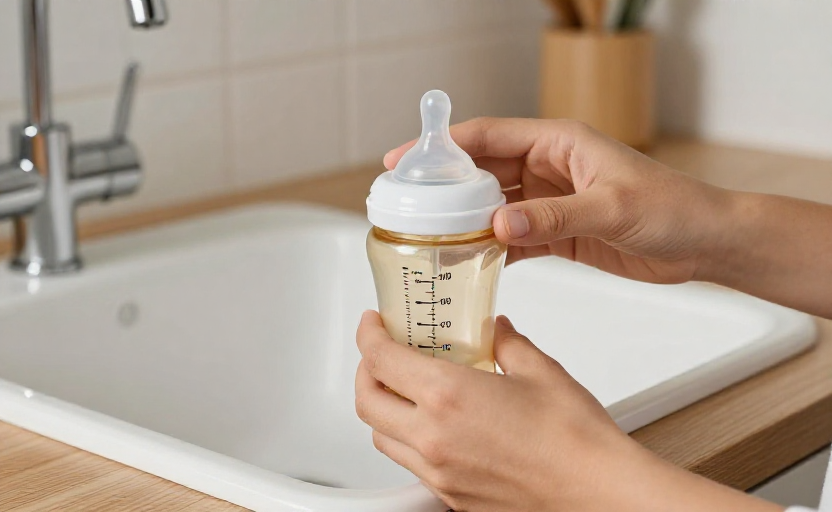
- Wash immediately after use. Don’t let milk sit. Disassemble the bottle completely—separate the nipple, collar, ring, and any valves. Rinse each part under cool running water to remove initial residue.
- Scrub thoroughly. Use a bottle brush and a small nipple brush with hot, soapy water. Pay special attention to the threaded areas of the bottle and the inside of nipples where milk can collect. Rinse every part completely under running water to remove all soap.
- Air-dry or pat dry. Place parts on a clean dish rack or paper towel. Avoid using a kitchen towel that may harbor germs.
- Sterilize. Once dry (or while still damp for steam methods), proceed with your chosen sterilization method. Handle sterilized items with clean hands or tongs.
How long should you sterilize?
The general guideline is to sterilize daily until your baby is at least three months old. After this point, their immune system is stronger, and they’re putting everything in their mouth anyway. You can transition to thorough washing with hot, soapy water, followed by a rinse in boiling water or occasional sterilization if an item has been dropped or you’re concerned about illness in the household.
Continue sterilizing for as long as your baby uses bottles or pacifiers if they were born prematurely, have a health condition, or if your pediatrician specifically advises it.
Keeping pacifiers safe
The rules for pacifiers are similar. Sterilize new pacifiers before first use and daily thereafter. If a pacifier falls on the floor, don’t “clean” it by putting it in your own mouth, as this transfers your oral bacteria. Rinse it under clean water or carry a spare. Never dip a pacifier in sweet substances to encourage use, as this promotes tooth decay.
Inspect pacifiers and bottle nipples before every use. Pull on them firmly. If you see any tears, thinning, stickiness, or discoloration, discard them immediately, as they can be a choking hazard.
Common questions answered
Can I just use a dishwasher? If your dishwasher has a sanitizing cycle that reaches a high enough temperature (usually above 158°F/70°C), it can be effective. However, the small parts of bottles and nipples may not get fully cleaned in a crowded load. Placing them in a dedicated basket on the top rack and running a full sanitize cycle is a good option for maintenance once your baby is past the newborn stage.
How do I store sterilized items? Ideally, assemble bottles with clean hands immediately after sterilization and place the sealed bottle in the refrigerator if you’re preparing them in advance. If you need to store parts, keep them in a clean, covered container. The sterility won’t last indefinitely in open air.
What about travel? Microwave steam bags are portable for hotel stays. Disposable sterilizing tablets and a travel container work well for longer trips or camping. You can also boil items in a hotel kettle or pot (dedicated to this use).
The goal isn’t perfection, but consistent care. By building these simple steps into your day, you provide a foundation of safety, letting you focus on the joys of feeding and soothing your little one.