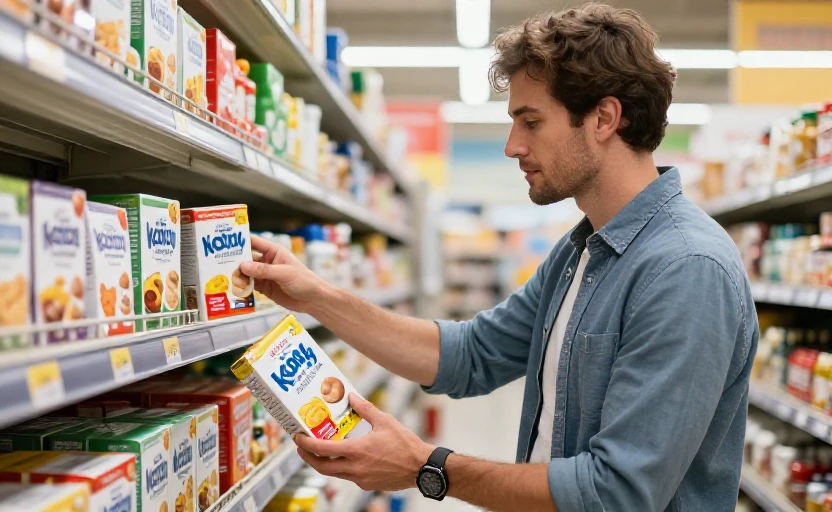
You’re standing in the grocery aisle, holding two seemingly identical boxes of toddler snacks. One promises "all-natural goodness," the other is "fortified with vitamins." Your eyes drift to the ingredient list, a dense block of tiny print filled with words you can’t pronounce. It feels less like a shopping trip and more like a chemistry exam. Decoding these lists is one of the most practical, yet daunting, skills for modern parents. It’s not about achieving perfection, but about cutting through the marketing noise to make more informed choices for your little one.
The goal isn’t to find a snack with only five ingredients you recognize (though that’s often a good start). It’s about understanding what you’re actually offering. Which ingredients are there for nutrition, which are for texture or shelf life, and which are just another name for sugar? Let’s demystify the label together, turning confusion into confidence one ingredient at a time.
Start at the Top: The Order Tells a Story
Ingredient lists are required by law to be in descending order by weight. The first three ingredients make up the bulk of what’s in the package. This is your most powerful clue. If the first item is "whole grain oats," that’s a solid foundation. If the first three are "corn syrup, sugar, and modified corn starch," you know the snack is primarily built on sweeteners and processed carbohydrates.
Think of the ingredient list as a recipe. The first items are the main components of the dish.
Pay special attention to where wholesome ingredients like fruits, vegetables, or whole grains fall. If "apple puree" is listed after three forms of sugar, the actual fruit content is minimal. This simple act of scanning the order can instantly rule many options in or out.
The Many Names of Sugar
This is where labels get clever. Sugar rarely appears just as "sugar." Manufacturers use a variety of names to sweeten products, and seeing them scattered throughout the list can make the total sugar content seem less alarming than it is.
Keep an eye out for these common aliases:
- Syrups: Corn syrup, high-fructose corn syrup, rice syrup, malt syrup, brown rice syrup.
- Words ending in '-ose': Sucrose, fructose, dextrose, maltose, glucose.
- Other sweeteners: Honey, agave nectar, maple syrup, fruit juice concentrate, cane juice, molasses.
If you see multiple types of sugar listed, even if each is lower on the list, they add up. A snack with "brown rice syrup, cane sugar, and fruit concentrate" is likely very sweet, even if it’s marketed as having "no added refined sugar."
Understanding Additives and Preservatives
Not every long chemical name is a red flag. Some additives serve functional purposes, like preventing spoilage or maintaining texture. The key is understanding their role.
Emulsifiers and Stabilizers (like soy lecithin, guar gum, xanthan gum) help blend ingredients that would otherwise separate and give snacks a consistent texture. These are generally recognized as safe in small amounts.
Preservatives (like mixed tocopherols—a form of Vitamin E—or ascorbic acid—Vitamin C) help keep fats from going rancid. Natural options like these are preferable to synthetic preservatives like BHA or BHT, which some parents choose to avoid.
Artificial Colors and Flavors are a common point of concern. They are listed as "artificial color (Red 40, Yellow 5)" or "artificial flavor." Many parents and health experts prefer snacks colored with real food sources, like beet juice or turmeric, and flavored with actual spices or fruit.
Spotting Hidden Sodium
While we often focus on sugar, sodium can be high in processed toddler snacks, especially crackers, puffs, and savory items. It’s not just "salt." Look for:
Monosodium glutamate (MSG),
Disodium phosphate,
Sodium benzoate,
or anything with "sodium" in the name.
Compare the % Daily Value for sodium on the Nutrition Facts panel. A good rule of thumb for a single snack serving is to aim for less than 5% DV for young toddlers.
"Health Halo" Ingredients to Question
Marketing loves buzzwords. An ingredient might sound healthy but contribute little nutritionally.
"Made with real fruit!" Check if it’s fruit puree or just "fruit flavor" and a tiny bit of juice concentrate for color.
"Contains vegetables!" Often, this means vegetable powder or starch (like spinach powder or tomato powder) added in minute quantities for a green or red hue, not meaningful vegetable content.
"Fortified with vitamins & minerals!" This isn’t inherently bad—it can help fill nutritional gaps. However, it shouldn’t be a substitute for a snack built on genuinely nutritious whole foods. A vitamin-fortified cookie is still a cookie.
Building a Simple Mental Checklist
You don’t need to memorize every additive. Instead, develop a quick scan routine:
- First Ingredients: Are they whole foods (oats, banana, quinoa) or refined (wheat flour, sugar, oil)?
- Sugar Sources: How many different sweeteners do I see, and where do they fall?
- Length & Familiarity: Can I pronounce most of these? A shorter list often means less processing.
- Concerning Additives: Am I seeing artificial colors or flavors I want to avoid?
Remember, this is a tool for empowerment, not anxiety. No single snack will be perfect. The aim is gradual improvement—choosing the better option more often than not. By learning to read the story the ingredient list tells, you take back control from the front-of-box claims and make choices that truly align with your values for your child’s well-being.