Navigating the transition from milk to solid foods is a major milestone, filled with excitement and, let’s be honest, a fair amount of anxiety. As your little one explores new tastes and textures, you want to provide the best nutrition for their rapid growth and development. Yet, not every food that’s fine for older children or adults is safe or suitable for a toddler under two. Their tiny bodies are still developing critical systems for digestion, immunity, and motor skills, making certain foods more than just unhealthy—they can be hazardous.
This guide focuses on the foods pediatric nutrition experts commonly suggest avoiding or approaching with extreme caution during these first two formative years. It’s not about fostering fear around food, but about empowering you with knowledge to create a safe, nourishing foundation for your child’s lifelong eating habits.
Why are some foods off-limits for toddlers?
Before we get to the specific foods, it helps to understand the why behind the guidance. A toddler under two has unique vulnerabilities. Their airways are small, making choking a serious risk. Their kidneys and liver are still maturing, so processing excess salt, certain chemicals, or heavy metals is harder. Their immune and digestive systems are naive, more susceptible to bacteria and less capable of handling complex sugars or tough fibers. Finally, their nutritional needs are specific; filling their tiny stomachs with low-nutrient foods can displace the vital vitamins, minerals, and healthy fats their growing brains and bodies desperately need.
Foods to avoid or approach with care
With that context, here are the key categories and specific foods that warrant a pause or a hard pass until after your child’s second birthday.
1. Choking hazards
This is the most immediate safety concern. Foods that are hard, round, slippery, or sticky can easily block a small airway. Always ensure food is prepared in a safe, age-appropriate way—think soft, mushy, or cut into tiny, manageable pieces.
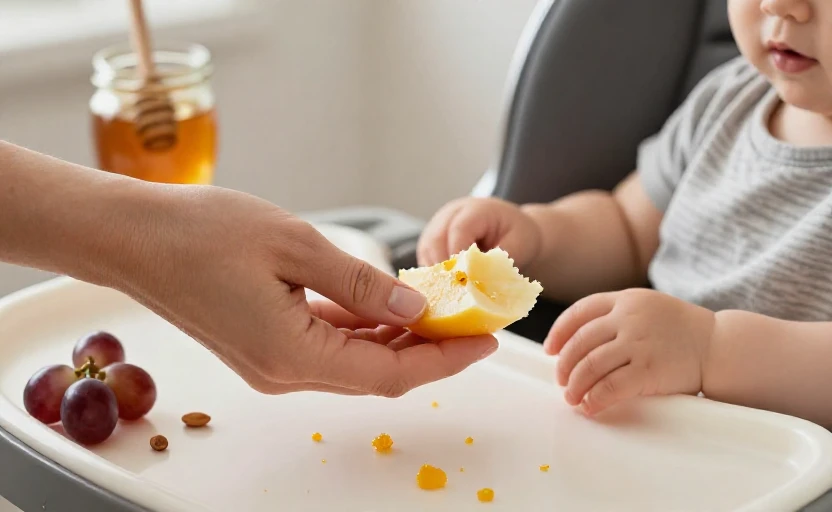
- Whole nuts and seeds: These are firm, round, and the perfect size to cause an obstruction. Nut and seed butters are a safer alternative, but should be spread thinly on toast or mixed into oatmeal to avoid a sticky glob that’s hard to swallow.
- Whole grapes, cherry tomatoes, and berries: Their round shape is the issue. Always cut them into quarters or smaller pieces lengthwise.
- Chunks of hard cheese or meat: Cut cheese into very small cubes or shred it. Meat should be tender, finely shredded, or ground.
- Hot dogs and sausages: If served, these must be sliced lengthwise and then into small pieces, never served in round coin-shaped slices.
- Popcorn, hard candy, and chewing gum: These are definite no-gos. Popcorn kernels are a triple threat: hard, a shape that can get lodged, and a light weight that’s easy to inhale.
When in doubt, ask yourself: Can I mash this easily between my thumb and forefinger? If not, it needs to be modified or saved for later.
2. Added sugars and sweeteners
The American Heart Association and other health bodies advise against any added sugars for children under two. This isn’t about being strict; it’s about protecting their health. Early exposure to sugary foods can set a preference for sweet tastes, increase the risk of cavities as new teeth emerge, and contribute to unhealthy weight gain without providing necessary nutrients.
Be a label detective. Added sugars hide in many unsuspecting places:
- Sweetened yogurts and flavored milks
- Packaged toddler snacks, cereals, and fruit pouches
- Juices (even 100% juice should be severely limited)
- Baked goods and desserts
Instead, offer the natural sweetness of whole fruits. For yogurt, choose plain, full-fat versions and add mashed banana or berries.
3. High-sodium foods
A toddler’s kidneys can’t handle much sodium. The goal is less than 1,200 mg per day for children 1-3 years old, but many processed foods blow past that in a single serving. Excess sodium can strain developing kidneys and establish a taste preference for salty foods.
Major sources to limit or avoid:
- Processed meats (deli meat, bacon, sausages)
- Canned soups and broths (unless labeled low-sodium)
- Packaged snacks like chips, crackers, and pretzels
- Fast food and restaurant meals
- Pre-made sauces and condiments
Focus on seasoning foods with herbs, spices, or a dash of citrus instead of salt.
4. Unpasteurized products and high-risk foods
A toddler’s immune system is still building its defenses, making them more susceptible to foodborne illnesses that can be severe.
- Unpasteurized (raw) milk and juices: These can contain harmful bacteria like E. coli, Salmonella, and Listeria. Always choose pasteurized products.
- Raw or undercooked eggs, meat, and seafood: Ensure eggs are cooked until the yolk and white are firm. Meat and fish should be cooked to safe internal temperatures to kill pathogens.
- Honey: This is a firm rule. Honey can contain bacterial spores that cause infant botulism, a rare but serious illness. Avoid all forms of honey, including in baked goods or cereals, until after age one.
5. Certain fish high in mercury
Fish is an excellent source of protein and omega-3 fatty acids, which are crucial for brain development. However, some large, predatory fish accumulate high levels of mercury, a metal that can harm a developing nervous system.
Fish to avoid include shark, swordfish, king mackerel, tilefish, and bigeye tuna. Instead, focus on low-mercury options like salmon (canned or fresh), light tuna (canned), cod, shrimp, and pollock. A general guideline is 1-2 servings per week of a variety of low-mercury fish.
6. Caffeinated drinks
This one might seem obvious, but it bears stating: toddlers have no business with caffeine. It can cause irritability, nervousness, rapid heart rate, and sleep disturbances. Beyond coffee and tea, remember that caffeine is also present in soda, some flavored waters, and even chocolate in smaller amounts. Stick to water, milk, and small amounts of diluted juice if offered.
7. Low-fat or fat-free milk (before age 2)
This is a common point of confusion. For children under two, whole milk (full-fat) is recommended. Why? Babies and toddlers need a high percentage of calories from fat for energy and brain development. Switching to low-fat (1% or 2%) or skim milk before age two can mean they miss out on these essential calories and fat-soluble vitamins. After their second birthday, you can discuss with your pediatrician whether to transition to lower-fat milk based on your child’s growth and overall diet.
Remember, this list is a guideline for minimizing risk and maximizing nutrition. The journey with food should be positive. Offer a variety of safe, wholesome foods, let your toddler explore textures (mess is part of the process!), and model healthy eating yourself. When you have questions or concerns about your child’s specific needs or reactions to food, your pediatrician or a registered dietitian is your best resource. You’re building the foundation for a lifetime of healthy eating, one safe and tasty bite at a time.