
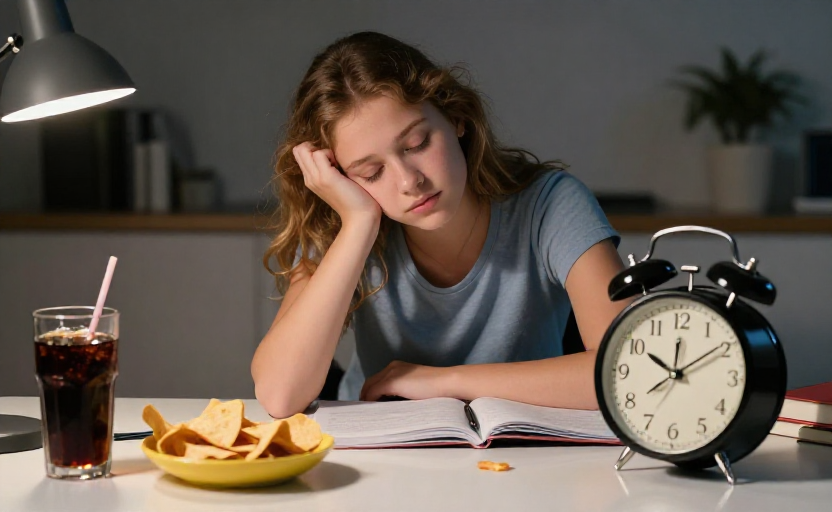
For a teenager, the connection between what you eat and how you feel can feel invisible. You grab what’s quick, what’s tasty, or what helps you power through another study session. But the foods and drinks you choose don’t just fuel your body; they send direct signals to your brain and nervous system, influencing everything from your ability to wind down at night to your resilience during a stressful day.
While no single food is a villain, certain everyday choices can quietly undermine your sleep quality and amplify feelings of anxiety and stress. By understanding how these common items interact with your body’s chemistry, you can make more informed choices that support your mental well-being from the inside out.
How Food Affects Sleep and Stress
Think of your brain as a complex network of chemical messengers. What you consume can alter the balance of these messengers. For instance, caffeine blocks adenosine, a chemical that makes you feel sleepy. Sugar can cause a rapid spike and subsequent crash in blood glucose, which your body interprets as stress, triggering the release of cortisol. Heavy, greasy meals demand a lot of energy to digest, which can disrupt your body’s natural wind-down process in the evening.
The goal isn’t to create a restrictive diet filled with “bad” foods. It’s about noticing patterns. If you regularly struggle to fall asleep or feel jittery and overwhelmed, looking at your intake of these five common categories can be a powerful first step toward feeling more balanced.
1. Caffeinated Drinks in the Afternoon and Evening
This one might seem obvious, but its impact is often underestimated. Caffeine isn’t just in coffee; it’s present in many sodas, energy drinks, black and green teas, and even some flavored waters and chocolate.
Caffeine’s primary job is to block adenosine receptors in your brain. Adenosine builds up throughout the day, creating “sleep pressure” that makes you feel tired. By blocking it, caffeine makes you feel alert. The problem is caffeine’s half-life—the time it takes for your body to eliminate half of it—is about 5 to 6 hours. A coffee at 4 p.m. means half that caffeine is still in your system at 9 or 10 p.m., quietly interfering with your brain’s ability to signal that it’s time for deep, restorative sleep.
Try setting a “caffeine curfew” at least 6 hours before your target bedtime. Switch to herbal tea, warm milk, or simply water in the later part of the day.
2. High-Sugar Snacks and Sweets
Reaching for candy, cookies, sugary cereal, or a soda for a quick energy boost is a common response to afternoon fatigue. However, this surge of simple sugars causes a rapid spike in blood glucose. Your pancreas releases insulin to manage it, often leading to a sharp drop in blood sugar levels an hour or two later.
This crash is a stress event for your body. It can trigger the release of stress hormones like cortisol and adrenaline, leaving you feeling irritable, shaky, and more anxious. Furthermore, research suggests that high-sugar diets can disrupt the quality of your sleep, leading to more frequent nighttime awakenings and less time spent in the deep, restorative stages of sleep.
3. Heavy, Greasy Fast Food
A late-night burger, pizza, or greasy fries might feel comforting, but it forces your digestive system into overdrive right when it should be slowing down for sleep. Digesting large amounts of fat is hard work, which can cause discomfort, bloating, and even acid reflux when you lie down.
This physical discomfort makes it difficult to fall asleep and can lead to fragmented sleep throughout the night. From a stress perspective, diets consistently high in saturated fats have been linked to increased inflammation in the body, which some studies associate with higher levels of anxiety and a reduced ability to cope with stress.
4. Excessively Salty Foods
Salty chips, processed snacks, and frozen meals are often teen pantry staples. While salt itself doesn’t directly cause stress or insomnia, consuming too much of it, especially close to bedtime, can lead to dehydration as your body works to balance its sodium levels.
Dehydration can manifest as headaches, dry mouth, and general restlessness—all of which can make falling asleep a challenge. The need to get up for water in the middle of the night also interrupts your sleep cycle. The subtle discomfort of being dehydrated can also put a low-grade strain on your system, making you feel less resilient.
If you eat something salty, consciously pair it with a full glass of water to help your body maintain balance.
5. Hidden Caffeine and Sugar in “Health” Foods
This is the sneaky category. Some foods and drinks marketed as healthy or energizing can be culprits. These include:
- Dark Chocolate: While it has antioxidants, it also contains caffeine and theobromine, another mild stimulant.
- Certain Protein or Energy Bars: Many are loaded with sugar, sugar alcohols (which can cause digestive upset), and sometimes added caffeine.
- Pre-workout Supplements & “Focus” Drinks: These are often packed with stimulants, including high doses of caffeine and other compounds like taurine or guarana.
- Some Herbal Teas: Yerba mate and some “energy” or “detox” tea blends contain natural caffeine.
The key here is to become a label reader. Check for added sugars (under many names like sucrose, high-fructose corn syrup, cane juice) and caffeine content.
Making changes doesn’t require perfection. Start by noticing. Keep a simple log for a few days: what you eat and drink, and how you feel a few hours later—especially in the evenings. You might discover your own personal triggers. Swapping just one of these items for a gentler alternative, like swapping a soda for sparkling water or having a piece of fruit instead of candy, can be a meaningful step toward better sleep and a calmer, more manageable day.