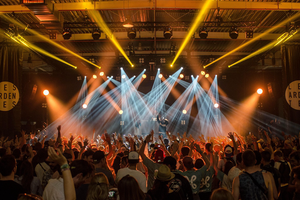

You walk toward the podium. Your mouth goes dry. Your heart hammers against your ribs. You assume it's the usual stage fright—but what if something else is quietly cranking up your anxiety before you even open your mouth?
Public speaking fear rarely comes from the spotlight alone. Often, it's a slow burn fueled by triggers you don't notice. Recognizing these hidden accelerants can help you step back from the ledge and speak with a clearer head.
The physical jitters that masquerade as fear
Your body doesn't always know the difference between "nervous" and "revved up." Caffeine is a classic example. That pre-talk coffee or energy drink spikes cortisol and adrenaline—the same chemicals your body releases when you're scared. You then feel wired, shaky, and interpret those sensations as panic.
Low blood sugar from skipping a meal works the other way, creating a wobbly, lightheaded feeling your brain labels as terror. Similarly, shallow breathing—something many of us do when we focus—starves the brain of oxygen, which amplifies the fight-or-flight response.
A nervous stomach before a speech isn't always psychological. It may be a blood-sugar or caffeine dip your body is incorrectly reading as fear.
The room itself sends signals you don't catch
We often blame the audience, but the space matters more than we think. Fluorescent lights flicker at a frequency that subtly strains the nervous system. A room that's too warm activates your body's stress response (heat stress is real). A room that's too cold keeps you tense.
There's also the echo factor. A room with bad acoustics makes your own voice feel foreign and tinny. When your ears hear a distorted version of your speech, your brain registers dissonance—and that dissonance registers as something being wrong, even when your content is fine.
Your mouth sends danger signals to your brain
Dehydration might be the stealthiest spike of all. Public speaking often means talking for minutes at a time without stopping. Saliva production slows. Your throat constricts slightly. Dry mouth triggers an ancient survival response: I cannot swallow, therefore I am trapped, therefore I must be in danger.
Your brain then sends a signal to produce more adrenaline, which makes your mouth even drier. It's a feedback loop that feels like profound anxiety but started with a simple hydration deficit.
What about your voice? If you've already been speaking prior to your presentation—in meetings, chatter, or rehearsing—your vocal cords can accumulate tension. This tightness transfers to your throat, jaw, and shoulders, which your brain interprets as stress signals.
The hidden load of the hours before
Most of what spikes public speaking fear happens before you step on stage. Consider the weight of multitasking: responding to emails, checking notifications, engaging in small talk. Each micro-interaction adds a bit of cognitive load. By the time you speak, your system is already partially flooded.
This is particularly true if you've spent the morning scrolling social media or reading stressful news. Your brain, still processing the emotional residue of that content, enters the speaking situation already primed for vigilance. You feel inexplicably jumpy or irritable, mistaking it for speech anxiety.
Another hidden piece is posture. Hours of slouching over a phone or laptop shortens the chest muscles and compresses the diaphragm. When you stand to speak, you cannot take a full breath. Shallow breathing looks like nervousness to everyone—including you.
What you wore (or didn't wear) can spike your nerves
Clothing and temperature regulation overlap here, but there's a subtler effect. Tight collars, constrictive waistbands, or heavy fabrics send low-level sensory irritation to the brain. You may not consciously notice that your shirt is pulling or that your shoes pinch, but your nervous system does. Small physical discomforts stack up and can tip you from mildly anxious to overwhelmed.
Also, if you are wearing an outfit you don't normally move in, your brain lacks the proprioceptive confidence it has in familiar clothes. You feel physically "off" and interpret that as nervousness about the speech itself.
What to do about the stealth triggers
The good news: once you know what's actually spiking your fear, you can address it directly rather than trying to "calm down" in the moment.
- Hydrate early. Drink water consistently in the two hours before you speak. Sip room-temperature water during your talk. Your mouth will stay moist, and your brain won't get the false danger signal.
- Eat a stable snack. Something with protein and complex carbs (like an apple with nut butter) 45 minutes before you speak keeps your blood sugar steady and prevents the jitters of a drop.
- Check the room. If possible, stand in the space for 30 seconds before you begin. Acclimate to the light, the temperature, the sound. Your nervous system says: I have scanned this environment. It is known. It is safe.
- Scrub your pre-talk routine. Cut back on news, social feeds, and task-switching for 30 minutes before you speak. Silence notifications. Give your brain a chance to clear its buffer.
- Stretch your chest and shoulders. Before you stand up, open your arms wide, roll your shoulders back, and take one deep, audible exhale. This physically signals the vagus nerve to downshift your heart rate.
Public speaking fear is often a phantom—the real culprit is something your body is misreading entirely. Find the hidden trigger, and you short-circuit the false alarm.
Understanding these five triggers gives you a practical edge. Next time you feel that familiar spike of fear before a presentation, run through the list: hydration, food, environment, mental load, or physical wear. Chances are, one of them is the silent source. Fix the source, and the stage gets a lot less scary.