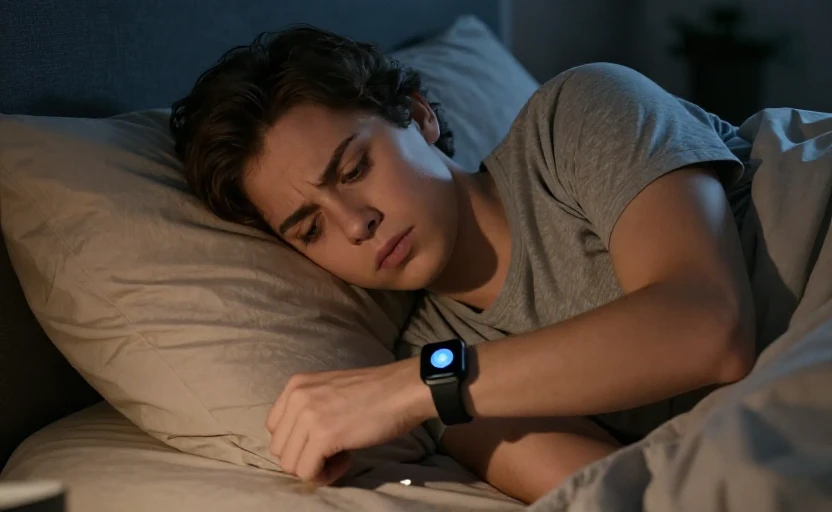
You bought a sleep tracker with the best of intentions—to understand your rest and finally wake up feeling refreshed. But instead of peace, you find yourself staring at the screen each morning, your heart sinking at a low score. You’re not alone. For some, the very tool meant to improve sleep becomes a source of nightly dread and morning stress. This phenomenon even has a name: orthosomnia, an unhealthy preoccupation with achieving perfect sleep data.
It’s a modern paradox. We seek data to gain control, but sometimes that data begins to control us. The goal isn’t to throw your tracker out the window, but to recognize when it’s crossing from helpful tool to harmful critic. Here are three subtle but significant warning signs that your sleep tracker is contributing to sleep anxiety, and how to reset your relationship with it.
1. You Feel Defined by Your Sleep Score
The most telling sign is an emotional shift. Does your mood in the first hour of your day hinge entirely on the number or color-coded rating your app displays? If a “poor” score puts you in a funk, or you feel a sense of personal failure over data, the tracker has moved from measuring your sleep to judging your worth.
This creates a cycle of performance anxiety. You go to bed not to rest, but to “score well.” The pressure to perform can itself trigger the nervous system, making the deep, restorative sleep you crave even more elusive. Sleep is a biological process, not an exam.
Your sleep data is information, not an evaluation of you as a person.
Ask yourself: Would I feel this disappointed if I didn’t know the number? If the answer is no, the tracker is adding a layer of judgment that nature never intended.
2. You Engage in Compensatory or Restrictive Behaviors
When data drives behavior in extreme ways, it’s a red flag. This manifests in two directions:
- Overcompensation: You see a low “deep sleep” percentage, so you force yourself to stay in bed for 10 hours, hoping to log more. You might cancel morning plans or avoid evening activities out of fear they’ll “ruin” your data, shrinking your life to serve the algorithm.
- Restriction: Conversely, you might see a good score after a late-night coffee and mistakenly conclude caffeine doesn’t affect you, overriding your own bodily cues. Or you become rigid about a specific bedtime dictated by the app’s “ideal” window, ignoring your natural feelings of sleepiness.
In both cases, you’re outsourcing your intuition to a device. You stop listening to your body’s true signals—feeling rested, having energy—and replace them with a digital proxy.
3. You Check the Data Before You Even Feel Your Body
Consider your very first conscious action upon waking. Do you stretch, notice the light, or take a deep breath? Or do you immediately reach for your phone to scrutinize your sleep stages?
This habit effectively allows a piece of technology to frame your entire day before you’ve had a chance to form your own impression. It anchors your awareness outside of yourself. You might feel subjectively great, but see a poor score and suddenly doubt that feeling. Or you might feel groggy, see a great score, and feel confused. This disconnect erodes self-trust.
If you recognize these signs, it doesn’t mean you need to abandon tracking forever. It means you need to establish healthier boundaries. Try a “data detox” for a week or two. Put the device in a drawer and simply go to bed when you’re tired and get up when you wake. Recalibrate to your internal sense of rest.
When you reintroduce it, change your relationship with the data. Look for long-term trends over weeks, not nightly verdicts. Remember that consumer trackers, while insightful, are not medical devices. They infer sleep stages from movement and heart rate, which can be thrown off by a still wakeful period or a sleeping partner.
Ultimately, the most accurate metric is how you feel. Does your body feel restored? Do you have sustainable energy throughout the day? Use your tracker as a curious guide, not a grading system. Your sleep is yours; the data is just one perspective on it.