
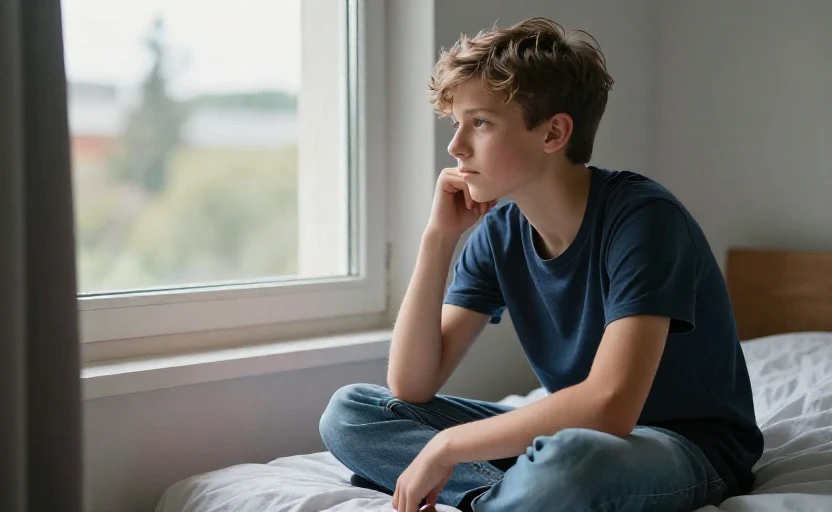
Anxiety in teenagers rarely announces itself with a dramatic declaration. More often, it whispers through changes in behavior that can be easy to miss or dismiss as typical adolescent moodiness. As a parent or caregiver, learning to recognize these quieter signals is a profound act of support. It allows you to respond with connection rather than correction, offering a lifeline before the internal pressure builds.
This isn't about diagnosing or pathologizing normal stress. It's about tuning into shifts that persist, patterns that seem out of character, and offering a steady, non-judgmental presence. The goal is to see the child behind the behavior, not just the behavior itself.
1. The Retreat: Withdrawal from Usual Social Circles
It's common for teen friendships to evolve, but a marked and persistent withdrawal from established, once-enjoyed social circles is a subtle red flag. This isn't the occasional desire for solitude, which is healthy. This is a gradual disengagement from peers, family dinners, and activities they used to love, often replaced by excessive time alone in their room.
They might make excuses to avoid gatherings, stop responding to friends' messages, or express a new, uncharacteristic cynicism about their friendships. The underlying feeling is often one of overwhelm—social interaction starts to feel like a performance they no longer have the energy to sustain, or they fear they can't "keep up" with their peers' seemingly perfect lives.
Look for a pattern of avoidance, not just a bad day. The key question is: Has their fundamental desire for connection changed?
How to Respond
Resist the urge to force socialization or lecture them about the importance of friends. This often increases feelings of alienation. Instead, create low-pressure opportunities for connection with you.
- Offer parallel presence: Do a quiet activity alongside them, like cooking or driving, without demanding conversation. Your calm presence can feel safer than face-to-face interrogation.
- Normalize the feeling: Try a gentle, non-blaming opener: "I've noticed things with your friends seem different lately. Sometimes when people feel anxious, hanging out can start to feel like a lot of work. I get that."
- Bridge the gap: Suggest a one-on-one outing with a single, trusted friend, rather than a group event, to lower the social demand.
2. The Overcorrection: Perfectionism and Irritability Over Minor Setbacks
Anxiety can masquerade as intense frustration or anger over small mistakes—a B+ on a paper, a missed shot in a game, a minor criticism. What looks like a disproportionate outburst is often a teen's terrified response to a perceived threat: the threat of failure, judgment, or not being "enough."
This perfectionism is a coping mechanism. If they can control every outcome and make everything flawless, they believe they can stave off the anxious feelings. When that control inevitably slips, the underlying panic surfaces as irritability, tears, or rage directed at themselves or those nearby. You might hear phrases like "I'm so stupid" or "I ruined everything" over trivial events.
How to Respond
In the moment, reasoning with the emotion is futile. The goal is to de-escalate and address the fear behind the fire.
- Validate the emotion, not the reaction: Say, "This feels really huge and frustrating to you right now. I can see how upset you are." Avoid "It's not a big deal," which minimizes their experience.
- Separate worth from performance: Later, when calm, gently reinforce that your love and their value are not tied to achievements. Share your own stories of small failures and what you learned.
- Model self-compassion: Let them hear you speak kindly to yourself after a mistake. "Well, I messed that up. It's okay, I'll try a different way tomorrow." This scripts a healthier internal dialogue.
3. The Physical Whisper: Unexplained Aches and Sleep Disruption
The mind and body are inextricably linked. Chronic anxiety sends constant low-level stress signals that manifest physically, especially in teens who may lack the vocabulary to describe their emotional state. Common complaints include frequent headaches, stomachaches, or general muscle tension, particularly in the neck and shoulders.
Sleep is another major tell. Anxiety disrupts both falling asleep (a racing mind won't quiet) and staying asleep. You might notice them staying up extremely late, exhausted but unable to shut off, or waking up repeatedly. Conversely, they may sleep excessively as an escape from anxious feelings.
Always consult a pediatrician to rule out medical causes for persistent physical symptoms.
How to Respond
Address the physical need without immediately linking it to anxiety, which can feel accusatory to a teen who genuinely feels physically ill.
- Lead with care: "I've noticed you've been having a lot of headaches. That must be miserable. Let's make sure we help your body feel better."
- Establish a wind-down routine: Collaborate on a pre-sleep ritual for the whole household: no screens 60 minutes before bed, dim lights, perhaps a shared cup of caffeine-free tea or quiet reading time. This creates a calm environment without singling them out.
- Teach body awareness: Introduce simple techniques like the 4-7-8 breath (inhale 4, hold 7, exhale 8) or progressive muscle relaxation as tools for "quieting a busy body," framing it as a skill for anyone, not a treatment for a problem.
Creating a Foundation for Support
Responding to these signs is about more than isolated conversations. It's about fostering an ongoing environment where feelings can be aired without fear.
Prioritize open-ended questions ("How did that feel?") over closed ones ("Did you have a good day?"). Listen to understand, not to solve. Often, teens don't want a fix; they want to feel heard. Most importantly, if the signs are persistent, interfering with daily life, or causing you significant concern, partner with a professional. A pediatrician, school counselor, or child therapist can provide assessment and support. Seeking help is a sign of strength and a powerful message to your teen: your well-being matters, and we will navigate this together.