Sleep is the scaffolding of a child's development, yet many parents mistake subtle signs of poor sleep for behavior problems, picky eating, or simply a difficult phase. A child who isn't sleeping well won't always yawn or complain of being tired. Instead, the signs are often quieter, and more easily attributed to other causes.
Understanding these understated signals can help you address sleep disruption early, before it snowballs into mood struggles, attention issues, or immune weakness. Here are three subtle clues that your child's sleep may be disrupted, even if they seem to be getting enough hours in bed.
1. Daytime Hyperactivity or Impulsivity
When a child is running around, bouncing off furniture, or having trouble focusing, the natural assumption is that they have boundless energy. But in many children, especially those under ten, hyperactivity is actually the brain's response to exhaustion. A tired nervous system tries to self-stimulate to stay awake, producing behavior that looks like the opposite of sleepiness.
This is sometimes called a sleep-wake dysregulation. The child may have slept a full eight or nine hours, but the quality was poor—frequent awakenings, restless legs, or an undiagnosed breathing issue like mild sleep apnea. In the classroom, this can look like ADHD-like symptoms. At home, it may look like defiance or an inability to settle down.
The key is to look at the pattern. If the hyperactive behavior occurs most afternoons or seems worse after nights when the child was restless (tossing, snoring, mouth breathing), disrupted sleep is a likely culprit.
2. Morning Headaches or Irritability Upon Waking
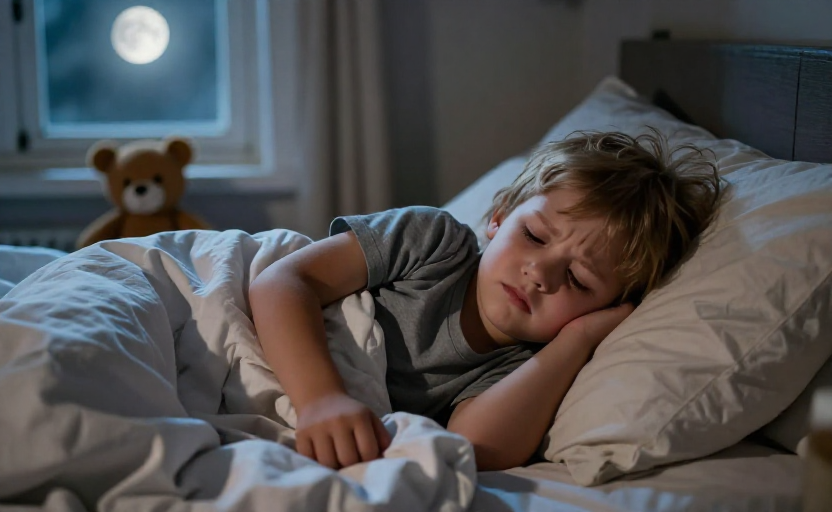
Children rarely complain of headaches in the same way adults do. Instead, a child who wakes with a headache might be irritable, tearful, or refuse to eat breakfast. They may say their head feels "heavy" or they just want to lie down. These complaints are easy to dismiss as morning grumpiness or a sugar low.
However, morning headaches in children are a classic sign of sleep-disordered breathing—including enlarged tonsils, allergies, or obstructive sleep apnea. During deep sleep, the body's oxygen levels can drop slightly if the airway is partially blocked, leading to headaches upon waking. Even if the child isn't snoring loudly, subtle airway resistance can cause this symptom.
If your child regularly wakes in a bad mood, complains of a sore head, or has dark circles under their eyes, consider whether their nighttime breathing might be impaired. An evaluation by a pediatric sleep specialist or an ENT doctor can clarify this.
3. Nighttime Sweating (Not Related to Room Temperature)
Many parents assume a sweaty child at night simply means the room is too warm or the pajamas are too thick. But when the room is cool and the child is still waking up drenched, it can indicate something deeper. Night sweats in children often point to autonomic nervous system activation during sleep—the body is working harder than it should be to maintain breathing or regulate temperature during the night.
This can happen with mild sleep apnea, where the body repeatedly fights to reopen the airway. It can also occur with restless legs syndrome or periodic limb movement disorder, both of which cause micro-awakenings that the child isn't conscious of. These frequent interruptions prevent the body from entering deep, restorative sleep stages.
If your child's pillow or sheets are consistently damp in the morning and they seem sluggish during the day, night sweats combined with fatigue is a signal worth pursuing.
Other Quiet Signs Worth Noticing
While the three signs above are the most frequently missed, a few other subtle signals deserve attention:
- Bedwetting after a period of dryness: A child who was previously dry at night and starts wetting again may be experiencing deeper sleep disruptions or pressure on the bladder from constipation—both sleep disruptors.
- Snoring or mouth breathing: Even if it's mild, any regular snoring (not just a stuffy nose) warrants a conversation with your pediatrician.
- Sleepwalking or night terrors: These are common in young children but can become more frequent when sleep is fragmented.
What Parents Can Do
If you suspect sleep disruption, start with a simple sleep diary for two weeks. Track bedtime, wake time, any awakenings, snoring, morning mood, and daytime behavior. Share this with your child's doctor. Many pediatricians are trained to spot sleep issues but benefit from concrete observations.
Simple adjustments often help: blackout curtains, a consistent bedtime routine, removing screens an hour before bed, and checking for allergens in the bedroom. However, if signs like loud snoring, gasping, or observed pauses in breathing appear, a sleep study may be necessary.
Disrupted sleep in children is common but treatable. By recognizing these subtle signs, you can step in early and help your child get the restorative rest they need for healthy growth, learning, and emotional balance.