
What a teen drinks throughout the day does more than just quench thirst. It can be a subtle but powerful tool for supporting mood, focus, and overall well-being. While food often gets the spotlight in nutrition conversations, beverages are a daily—and sometimes hourly—choice that directly impacts hydration status, blood sugar levels, and even neurotransmitter function. For parents and teens navigating the complex world of mood and energy, understanding which drinks can help and which might hinder is a practical place to start.
We spoke with registered dietitians to cut through the noise and identify the most hydrating, mood-supportive drinks for teens, along with a few common choices it’s wise to enjoy in moderation.
Why hydration is a cornerstone of teen mood
Before diving into specific drinks, it’s helpful to understand the link between hydration and mood. The brain is about 75% water. Even mild dehydration can impair cognitive function, concentration, and short-term memory. For a teen balancing school, activities, and social life, this can directly translate to feeling foggy, irritable, or fatigued.
Dehydration doesn't just make you thirsty. It can quietly drain your energy and dim your mood before you even realize what's happening.
Furthermore, stable energy is key to stable mood. Many popular teen beverages are loaded with simple sugars or artificial sweeteners, which can cause rapid spikes and crashes in blood glucose. This rollercoaster can manifest as jittery anxiety followed by sluggishness and irritability. Choosing drinks that promote steady hydration without these dramatic swings is a foundational step toward supporting a more balanced emotional state.
Three hydrating drinks to boost teen mood
These selections prioritize hydration, provide beneficial nutrients, and help avoid the blood sugar chaos that can disrupt mood.
1. Plain or infused water
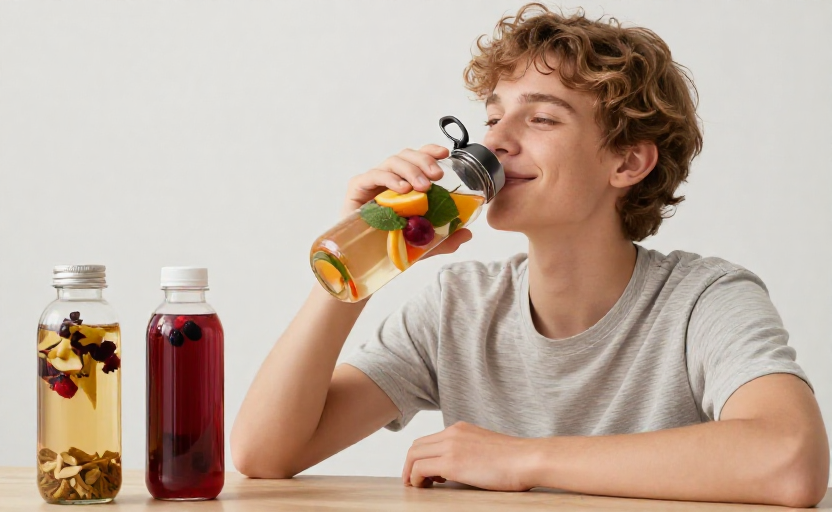
It might seem obvious, but water is the undisputed champion of hydration. Encouraging a habit of sipping water throughout the day is one of the most effective mood-support strategies. For teens who find plain water boring, infusion is a simple, sugar-free solution.
- How it helps: Maintains optimal brain hydration for clear thinking and physical energy. Adding slices of cucumber, citrus, berries, or fresh mint provides a hint of flavor without calories or additives, making it more appealing.
- Dietitian tip: “A reusable water bottle that a teen likes is half the battle. Keep it filled and within reach, especially during school hours and study sessions.”
2. Herbal teas (cooled or warm)
Herbal teas like chamomile, peppermint, ginger, or hibiscus are excellent, caffeine-free options. They can be enjoyed warm as a calming ritual or brewed in bulk and kept chilled in the fridge.
- How it helps: Provides hydration while offering specific benefits. Chamomile is known for its gentle calming properties, peppermint can soothe an upset stomach (often tied to anxiety), and ginger has anti-inflammatory effects. The act of sipping a warm tea can also be a mindful pause in a busy day.
- Dietitian tip: “Let your teen explore flavors to find one they enjoy. Avoid teas with ‘proprietary blends’ marketed for energy or sleep, as they may contain unnecessary additives.”
3. Tart cherry juice (in moderation)
100% tart cherry juice, diluted with water or sparkling water, is a unique contender. It’s important to choose a brand without added sugars and to treat it as a occasional beverage, not a daily staple, due to its natural sugar content.
- How it helps: Tart cherries are a natural source of melatonin and antioxidants. Some research suggests they may support sleep quality and recovery from exercise, both of which are crucial for regulating teen mood and stress.
- Dietitian tip: “Think of this as a functional beverage, not a thirst-quencher. A small glass (4-6 oz) diluted in the evening, a few times a week, can be a better choice than sugary desserts or sodas.”
Three drinks to enjoy with awareness
These beverages are common in teen diets, but their impact on mood and hydration means they are best consumed mindfully and in limited quantities.
1. Sugary sodas and energy drinks
This category includes regular soda, sweetened iced teas, sports drinks consumed outside of intense athletic activity, and most energy drinks.
- Why limit: The high dose of simple sugar causes a rapid rise in blood sugar and insulin, often followed by a crash that can trigger anxiety, irritability, and fatigue. Energy drinks combine this sugar with high doses of caffeine and other stimulants, which can exacerbate anxiety and disrupt sleep patterns—a major mood destabilizer.
- Better approach: Reserve for rare occasions, not daily consumption. For a fizzy treat, try sparkling water with a splash of 100% juice.
2. Excessive caffeine from coffee or espresso drinks
A small amount of caffeine (like a cup of black coffee) may be fine for some older teens, but the trend of large, sweetened espresso drinks is problematic.
- Why limit: Excessive caffeine (>100mg for many teens) can increase feelings of nervousness and anxiety, interfere with sleep, and lead to dependence, where mood dips when the caffeine wears off. When combined with sugary syrups and whipped cream, the blood sugar effect doubles the potential for mood disruption.
- Better approach: If consuming caffeine, keep it simple, small, and early in the day. Encourage viewing it as a bitter, functional drink, not a dessert.
3>Artificially sweetened diet drinks
While these seem like a smart swap for sugary sodas, emerging research suggests they may not be neutral for mood or gut health.
- Why limit: Some studies indicate that artificial sweeteners may alter the gut microbiome, which is intimately connected to brain health and mood via the gut-brain axis. Furthermore, they perpetuate a preference for intense sweetness, making naturally flavored drinks like water less appealing.
- Better approach: Use as a transitional tool if needed, but aim to cultivate a taste for beverages that are either genuinely hydrating (water, tea) or offer nutritional benefits, rather than relying on chemically sweetened options.
Ultimately, building better beverage habits is about addition, not just restriction. By making delicious, hydrating options like infused water and herbal teas easily available and appealing, the drinks best limited naturally become less central. It’s a simple, sustainable way to support a teen’s physical and emotional resilience every day.