
When we talk about stress, we usually point a finger at our schedule, our to-do list, or our racing thoughts. But the biological engine of the stress response—cortisol—is far more sensitive to what is happening in your digestive tract than most of us realize.
The gut-brain axis is a two-way highway. An unhappy gut can send distress signals that keep cortisol levels elevated, and high cortisol, in turn, can disrupt the gut lining and microbiome. The good news? You can break that cycle without overhauling your entire life. Here are three gut-focused adjustments that directly support a healthy cortisol rhythm.
Why Your Gut Talks to Your Adrenal Glands
Before we dive into the adjustments, it helps to understand the connection. The vagus nerve runs from your brainstem down to your abdomen, acting as a direct communication line. Your gut microbes produce neurotransmitters like serotonin and GABA, which influence mood and stress resilience. When the gut lining is irritated or the microbial balance is off, inflammatory signals rise—and cortisol follows.
This isn't about perfection. It's about giving your digestive system the conditions it needs to signal safety rather than threat.
1. Anchor Your Day with a Magnesium-Rich Evening Snack
Magnesium is a mineral that gets depleted under chronic stress, and it happens to be essential for both gut motility and the relaxation of the nervous system. A magnesium shortfall can lead to muscle tension, poor sleep, and a sluggish colon—all of which nudge cortisol higher.
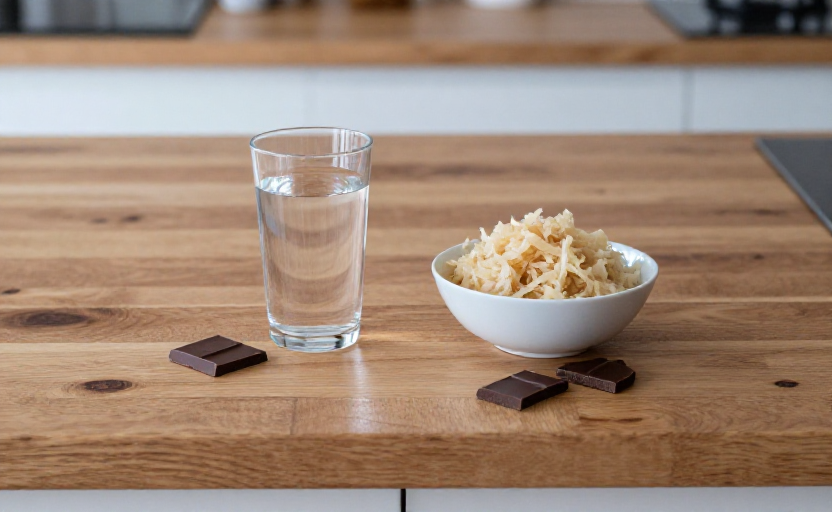
The adjustment here is simple: replace late-night screen-scrolling or sugar cravings with a magnesium-rich but low-stimulus snack. Think a small handful of pumpkin seeds, a few squares of dark chocolate (70% or higher), or a warm cup of unsweetened almond milk. You're not chasing a therapeutic dose of magnesium—you're creating a ritual that tells your body it is safe to rest and digest.
A tip for better absorption: Pair magnesium-rich foods with a source of vitamin B6, like a slice of banana or a small handful of sunflower seeds. This helps the mineral cross cell membranes more efficiently.
2. Start Your Morning with a Cold Shock—No, Not Ice Baths
You don't need to plunge into freezing water to get the gut-cooling, cortisol-lowering benefits of cold exposure. A much gentler entry point is to drink a large glass of cool water as soon as you wake up, before coffee, and to rinse your face with cold water for thirty seconds.
What's happening here is a mild, brief activation of the vagus nerve. That short burst signals a shift from the sympathetic (fight-or-flight) to the parasympathetic (rest-and-digest) state. Over weeks, this practice improves gastric motility and reduces the morning cortisol spike that many people experience.
If you want to take it a step further, follow the cool water with a few minutes of slow, diaphragmatic breathing. Inhale for four counts, hold for four, exhale for six. That pattern directly calms the enteric nervous system—the gut's own nervous network.
3. Add a Fermented Food to One Meal (Not All Three)
Fermented foods like yogurt, kefir, sauerkraut, or kimchi introduce live microbes that support a diverse gut microbiome. Diversity in gut bacteria is consistently linked to lower baseline cortisol levels and reduced inflammation. But there's a catch: more is not better if you have a sensitive gut.
The adjustment here is precision. Pick one meal per day—breakfast or lunch works well—and add a single tablespoon of fermented food. That tiny amount is enough to send a positive signal to the microbiome without overwhelming your system with histamines or gas. Over two weeks, you can slowly increase to two or three tablespoons.
Watch for reactions: If you feel bloated or anxious after eating fermented foods, your gut may be reacting to histamine. Try a less aged option, like fresh sauerkraut from the refrigerated section, or a low-histamine fermented vegetable like carrots.
What to Avoid While Making These Adjustments
These three habits work best when you remove one or two gut-irritating factors. The biggest cortisol-raising culprits for most people are constant snacking (which keeps insulin high and disrupts the cortisol curve) and drinking caffeine on an empty stomach. If you skip breakfast and drink coffee first thing, your gut lining gets a direct dose of acid and cortisol rises sharply. A simple fix: eat a small protein-rich bite before your coffee, or switch to a cup of lower-acid coffee.
The Rhythm Is More Important Than the Rules
The underlying principle across all three adjustments is rhythm. A magnesium-rich evening snack, a cool-water morning ritual, and a single serving of fermented food—none of these are extreme measures. But when practiced consistently, they tell your gut that the environment is safe, that food is coming at predictable times, and that stress is not constant. That safety signal is what ultimately lowers cortisol.
Give yourself two weeks to try two of the three adjustments. Notice how your digestion changes, how you sleep, and how your mind settles. The data your gut sends to your brain will shift, and your stress response will quiet down naturally.